Deon Dolphin Rune Magic: The Celtic runes as a tool for personal transformation Van Nuys (CA): Newcastle Publishing, 1987. 149 pp., $9.95.

 At one time, all I knew about the runes was an obscure line in Poe's The Bells, where a chorus of demons is tolling "bells, bells, bells, in a sort of Runic rhyme ... " or something like that. Poe probably chose the line for the sound effects, rather that for any great interest in the Rune themselves. But we can use the runes as a form of divination, or character analysis, or whatever mystical meaning we want to read into them.

 This classic text is only one of dozens of "explanations" of the runes, intended to provide beginners (like you and me) with the tools we need for readings for ourselves and our friends. After some preliminary background information, the author plunges into a series of actual interpretations of varioous patterns in the runes. Drawn or engraved in small stones, shells, or other objects they are cast into a set of three circles, preferably drawn on a specially marked cloth. (Of course, there are probably as many ways of casting the runes as there are people reading them, but this way is the one that the author describes.)

 Depending on their positions in the circles, the runes can be interpreted for the client to show his or her character, decisions to be made, possible future happenings, or whatever else comes to their attention. The markings on the runes vary, according to the specific tradition that they represent, and the number of runes can be as many as fifteen, meaning that the reading will depend on the specific set of stones that are being consulted.

 For those that are looking for an alternative to the familiar occult tools many of us use, this book will provide an introduction to another way of performing readings.

JMM
Wednesday, September 12, 2007
Rune Magic: The Celtic runes as a tool for personal transformation


Thursday, August 30, 2007
The urge to "kill" the teacher?
My old friend and HP, Wayland Raven often tells his students that "there is no needs to kill the teacher. When it's time to move on, move on in peace".
We all (his students at the time) nodded sagely and tut-tutted about people being so rude when they leave a group. Truly, most of us were quite sure we would never want to leave such a warm, loving group and such a good teacher. And then, one by one, it came to be our turn to move on. Some moved on in peace. Some left amid shouting and rancor.
I have watched it happen to other friends and acquaintances, too. People who seemed very close, all of a sudden were full of fault finding and anger. Why does this happen? Why is it so hard to move on in peace when the time comes, without feeling the need to "kill" our spiritual teachers?
I think a part of it is the way we come to recognize people who have something to teach us. It's rather like falling in love, really. We see someone who seems uncommonly wise and astonishingly "together". We want to be near this person and learn what they know. We come to rely on the maturity and wisdom we perceive from them, whether through formal lesson or as living examples. These are the people we look up to. Just as in falling in love, though, we tend not to notice immediately the more "human" qualities and clay feet.
But it is our own perception of who a person is, our perception what she or he stands for, the part of his or her life that speaks to our own, that makes them stand out for us as teachers. In our desire to feed our own souls, we reshape the teacher into the person we need him or her to be and what we perceive may bear little resemblance to human to whom we attach these perceptions.
As we learn more of life’s most valuable lessons through them, teachers rise in our esteem. We be come more and more deeply attached to our perception of what the teacher represents and any indications that they may not be what we think they are cause momentary confusion, but are quickly dismissed.
Sooner or later, though, the day comes, (sooner if the teacher has done his or her job properly), when our need for the teacher diminishes. It is in that twilight of the teacher/student relationship that we begin to see the "flaws" of the teacher in the harsh light of day. It happens in love relationships, too. It doesn't have to mean the end of the relationship, if both parties are sufficiently mature. It does, however, mean that there is a fundamental change taking place. Either from "infatuation" to "mature love" or from student and teacher to respectful, amicable equals. The student eventually learns that the teacher was thoroughly human all along, but that momentary perception of the "perfect model" had us blinded to the flaws for a while, so that we would strive harder and further to reach our own spiritual goals.
When we begin to notice our teacher's flaws, the teacher may, indeed, be teaching us one last "lesson" by reflecting our own weaknesses back to us. We would do well to examine those aspects of ourselves that reflect what is most irritating about our teacher.
The mature student accepts that the illusion was his or her own and, though momentarily disappointed in the reality, expresses only gratitude for the time the teacher has spent and the lessons taught and learned. The mature teacher accepts that his or her work is complete in this relationship and gracefully accepts the students thanks without expectation.
In any case, we know the time has come to look further afield for inspiration and so, we start all over again.
Friday, August 24, 2007
Book Review: Ghost Stories
 by John M Morris
 When I was a kid, I was fascinated by stories of the occult, ranging from Ouija boards to tales of prophecies found in the Great Pyramid, encouraged by my mother's stories of ghosts she had discovered in an old house they'd once lived in. I tried to be sophisticated enough to ignore stories like these, but they must have stayed with me anyway. A recent book has recalled this earlier fascination with ghosts, fairies, and goodness knows what else, inhabiting the world of the supernatural.
John Kachuba's Ghosthunters is full of stories of encounters with ghostly presences, often scary, and always unexpected. The author has made a full-time job of lectures on ghosts, as well as explorations of haunted houses and other mysterious places. If you've ever had any doubts about the reality of ghosts, these tales will be enough to convince you otherwise.
At the same time, I'll have to admit that these encounters seem awfully trivial. There are no chests of gold dubloons, no secret jewel boxes, nothing of value discovered. I was reminded mostly of the search for Visitors from Outer Space, where there have been hundreds of encounters, but, sadly, nothing that really mattered. In any case, you may want to read a dozen ghost stories, which are here told, with many flourishes, as a way to get to sleep on a dark and windy night.
Wednesday, August 15, 2007
Review: The Secret Teachings of the Tao Te Ching by JM Morris
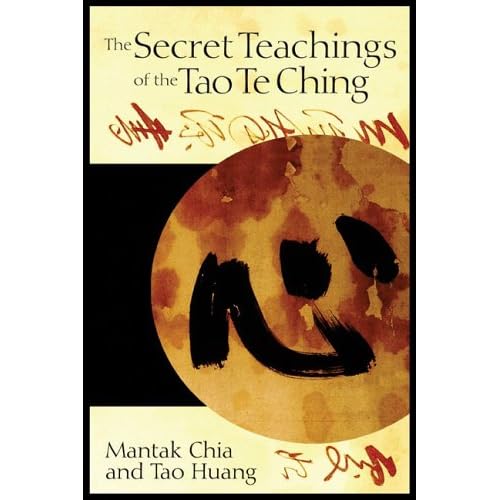
Mantak Chia and Tao Huang The Secret Teachings of the Tao Te Ching Rochester (VT): Destiny Books, 2005. 246 pp., $16.95.

Taoism may qualify as one of the world's oldest religions, dating back some 2,500 years, to the teachings of Lao-Tse, who summarized his teachings in short, pithy aphorisms, and who taught a religion without dogma, based more on direct, personal experience than on religious doctrines. It is particularly refreshing at a time when religion is relying on rigid doctrines that we thought the world had outgrown.

Again and again, Lao-Tse is looking beyond doctrine and dogma to find the essential core of the religious experience. Words are always misleading: "The Tao that can be named is not the eternal Tao," and, as religious leaders have repeatedly discovered, reciting words and doctrines will get us nowhere. "Logic and sermons will never convince," as Whitman says: "The chill of the night strikes deeper into my soul." Yes, Whitman would probably qualify as a Taoist, as would many of the prophets we have loved.


I would advise against studying the first half of this new text before you plunge into the second half, which contains the core of Taoist teachings. The initial chapters may be of interest to those of you who think in terms of exotic exercises (please don't ask me to give the details!) rather then spiritual searching. But the detailed quotations from the Tao Te Ching, together with the commentaries, which make up the second half of this book, are well worth exploring.

Sunday, August 12, 2007
Love, by John Morris
I was watching a film clip, on an obscure Internet site, with an affectionate interlude between a dog and a cat, both of them enjoying the other's warmth. The kitty was licking the dog's face at one point, and the dog was gently hugging the cat. They were obviously very much in love.

 It reminded me of lessons I learned long ago in a theological school, in which the religious tradition has made a sharp distinction among erotic love, parental love, and brotherly love, as though these were quite different sorts of human  experience. Erotic love, with Venus or Aphrodote as its matron Goddess, has always been the most exciting, but also the most dangerous, to the extent that some religions have called it "sin":
 "Oh, do not tell the priest our plight, for he would call it sin! For we
 have been in the woods all night, a-conjuring summer in,"

in the words of Kipling's wonderful song, "Oak and ash and thorn." And, we can only mourn at the triumph,

 "Thou has conquered, O pale Galilean, and the world has grown gray with thy
 breath,"

in the words of one of my favorite poets, Algernon Charles Swinburne. We are slowly emerging out of that gray world, thanks to the warmth that Aphrodite has brought, full of light and color and love.

 Motherly and fatherly love is quite different. It is the warmth that the kitty and doggy showed. In pictures from Wolf Creek Habitat, down in Southern Indiana (visit them at www.nighthowls7.com -- they're wonderful!), we could see the daddy and mommy wolf waiting, patiently and hungrily, as four ravenous little cubs were feasting on a deer carcass. The parents were hungry, too, but they were waiting for the babies to have their meal first. This is what parents do. This is the fierce protective behavior that keeps the worst predators away from the children. This is the angry search of the Goddess Isis for the baby Horus, and which is the fierce, protective binding that holds the family together.

 Finally, there is the generous, brotherly or sisterly love that we sometimes find in warm, even heroic acts, like those that kept police, firemen, and many others searching through the ruins of the World Trade Center. Many of these men and women died, and others were left with lingering breathing problems, because of smoke and dust inhalation. More recently, miners were searching, apparently in vain, for some of their comrades trapped underground. Firefighters have been attempting to contain the many fires raging in our forests. This kind of heroism is an expression of another sort of love, that truly holds civilization together.

 There are many species and subspecies of love, but these three are the traditional varieties. Love is central to our religion, based as it is on "perfect love and perfect trust." Without love, there would be nothing left. With it, we rejoice in the light of day
Friday, August 03, 2007
Love and Death Across a Chasm
Love and Death Across a Chasm
by Misti Anslin Delaney
by Misti Anslin Delaney
The death of a loved one is always devastating, no matter how prepared we think we are. It's made even more difficult when that love was carefully built and nurtured across the chasm of cultural differences.
That was the case between my father and me. Dad was very conservative; a devout, and perhaps even fundamentalist, Roman Catholic with a very old world view of women and our place in the world. I am pretty liberal and, of course, I am a witch. I have a very different view than my father's of the place of women in the world. This caused untold trouble and tension between us throughout my childhood and young womanhood, even before the religious thing.
As we both grew older and more tolerant, we realized that each of us wanted a better, closer relationship, I with the only father I'll ever have, and he with his only daughter. So, slowly and carefully, we built a suspension bridge of tolerance and love, shared views on those few areas on which we could agree and our shared devotion to family, across the chasm between our worlds. Periodically we would crawl tentatively out onto that bridge to meet in the middle, clinging precariously to what security we could find there.
We had both come to trust that bridge in the decade since our first tentative attempts to build it, and so it was that we met there almost daily in long telephone conversations about everything and, mostly, nothing. It was there that he said "goodbye" in the weeks before he died. It was subtle, and I'm not sure he knew he was leaving ... but things were different somehow. My father, who had visited me only twice in the 22 years since I left home, when he happened to be in the neighborhood, and who had not attended either of my weddings, suddenly started to make plans to come to my home to put air conditioners in my windows. (Not something I had planned to do.)
When, within a week of making those plans, he became too ill to travel, he sent me the first and only "surprise gift for no special reason" that he ever sent to me. It was small -- a bag of mesquite chips for our barbecues, because I had mentioned that they're a bit expensive up here -- but it was a gift specifically for me from my Dad.
The day after I received them, I received word that he had died suddenly.
I think the hardest part of my father's death was venturing out onto that precarious bridge alone, to cross back over into his world one last time for his funeral. I found myself very much alone in my father's world—welcome, but a stranger with strange views. I was surrounded by family and friends remarkable in their devotion to one another and to their God.
Although my mother and brothers know who I am, everyone else around us assumed that I shared my family's devotion to my father's faith. Since I didn't think religious arguments were going to help anyone through that difficult time, I elected to keep my own counsel for the nine days I was there.
Psychologists say that when a parent dies, we have a tendency to question everything about our lives. When our lives are a secret to the people we've grown up with, I think it redoubles the effect. My first challenge was figuring out what one does when one is a very visible participant in a religious ceremony where everyone assumes we share the faith, but we don't.
It seemed to me that even if my 25 years away hadn't removed any possibility of pretending I was a Catholic, to pretend now would serve only to make a farce of my family's faith. But to act like a complete alien to my mother's faith would be disrespectful and would hurt her deeply. So, I compromised. I sat, stood, and kneeled as the ceremony required and kept my head respectfully bent, but I was silent during the prayers.
I thought I was doing OK -- until the priest, who had no doubt counseled my parents about how to handle their only daughter's falling away from the faith, make several cutting remarks about "faithless, hopeless pagans". The first time, I couldn't believe what I'd heard. The second he looked right at me as he made his remark.
How very little he knows about us.
Through the time I was with them, my immediate family was very, very welcoming and loving. Believe it or not, that caused my second dilemma. I had tried for many years to believe as they do and all my life I had felt like an outsider in my own birth family. I know with deep regret the pain my "falling away" caused both my parents.
After a few days of the loving and welcoming, and the constant salvation talk, I found myself wondering, if I tried again now, whether I might be able to "believe" this time. Not for myself, but for my mother and father. My return to their church would have made my father so happy, and it would still bring my mother and brothers great joy.
Cut off, as I was at this vulnerable time, from anyone who really understood what I believe and who shares my faith in the Goddess and the God and the wheel of time, the joy my faith brings me began to seem "silly" and unreal.
Prevented by my respect for my family's beliefs from sharing my real understanding of what had happened between my father and myself in those last weeks and my certainty that he would be back, perhaps in the baby who was to be born to my brother and his wife just 5 weeks after Dad's death, I began to question everything. It was very painful. I knew I didn't (and probably couldn't) believe as they do. I knew that religion isn't something you choose, like a party dress, to please someone else. But I also couldn't feel my own faith. I felt that all faith had been cut away from me, and that my soul was raw and bleeding.
Fortunately, I am a voracious reader on almost any topic, and I knew the effects of mourning could have on one's soul, so I was able to observe these feelings with a little objectivity. I resisted the urge to act on anything until I was home, in my own world.
When I left for home, my mother sent with me a huge basket of flowers that had been sent for my father's funeral. As I carried that glorious basket through airports, people would stop me to comment on them and ask about them. It gave me a chance to explain to complete strangers that my father was dead. Everyone I met that way was extremely kind and the flight attendants were attentive and caring on every flight. That was very comforting. This time, as I crossed that bridge my father and I had built together for the last time, I didn't feel quite so alone.
When I was finally home, I was still haunted by my feeling of having had all belief cut away from me. For weeks I wasn't able to perform ritual, either for my father, or for myself. In a sense, I felt he was always nearby and would be hurt and perhaps insulted to have his beliefs disregarded by my doing ritual for him. It made no logical sense. Since he's passed through the veil, he now knows better than any of us alive, what Truth is. His soul is unlikely to be as encumbered by prejudice as those of us who must understand with our frail, limited little human brains. But the feeling persisted; the effect, no doubt, of my own childish guilt at wanting to do something that Daddy wouldn't approve of. (I have a very active inner toddler.)
I reached out to all the wisest pagans I knew to ask for thoughts and reaffirmation. Many shared with me thoughts that brought me great comfort, and one especially wise soul shared with me a ritual that could respect both my father's beliefs and my own.
Gradually, as the moon waxed, I too, grew stronger. As the full moon approached, I gathered the supplies I needed for what I had to do. On the day after the full moon, I set up a memorial to my father on my altar. A photograph of the man he was; a white pillar candle that burned as long as anyone was in the house and awake; a beautiful little glass box containing a few of the mesquite chips that were his last gift to me; and the basket of now dried flowers from his funeral.
Each time I lit the candle, I told my father that I love him, and will miss him, but that it was now time to move on. I sent the energy of the burning candle to him to help him find his way into his next world, whether it be the heaven he so looked forward to, or a new life here.
On the next full moon, I will did a ritual alone, commending my father's soul to his God. I asked my spirit guides for support in learning to live without my father, in the middle of that bridge we'd built through the years from the tears and yearnings of two very different souls who wanted to love and understand.
©1998 Misti Anslin Delaney
Thursday, July 26, 2007
How To Churn Out Another Book -- a book review by John Morris

Elizabeth Barrette Composing Magic: How to Create Magical Spells, Rituals, Blessings, Chants and Prayers Franklin Lakes (NJ): New Page Books, 2007. 240 pp, $14.99.
Any of us who have been thrown, kicking and screaming, into the task of preparing and leading a ritual for one of our groups would appreciate a how-to book like this, with clear instructions on each of the many details that go into making an effective ceremony. This is one of the things we were taught back in theological schools, but there has been little available to the leaders of our contemporary magical groups. Elizabeth Barrette here attempts to fill this need with her new book, which may be the only instruction book yet produced to guide the neophyte practitioner.
If you read this book, I'd advise you to start with the last few chapters, which provide a number of hints for actually preparing a ritual outline and leading the ritual itself. There are also some hints for getting your bright, new ritual prepared for publication, and, with luck, actually publishing it.
Unfortunately, there is little warning to the would-be author about the very poor odds you face with any commercial publisher, who has already been faced with a flood of amateur authors eager to hit the high road to fame and fortune with their new book.
Elizabeth Barrette is at the other extreme, an author who has written many books and who is fairly well-assured that they will be snapped up by the publisher. But fame and fortune have their own dangers. In this case, Barrette has thrown together a variety of topics, many of which are only marginally relevant to the ritual writer.
Most unfortunate is a long section, taking a third of the book, on how to writer poetry,together with page after page of well-known poems, mostly aging poetry from the well-known poets of the distant past. There is no hint of the exciting new work that appears in such journals as Poetry or American Poetry Review, where contemporary poets often experiment with many new forms, happily discarding most of the rules that we learned in college classes many years ago.
Sadly, too, when Barrette includes two or three of her own poems as examples, the results are pretty miserable.
When you're faced with the job of preparing a ritual, then, it's certainly best to begin with what you know and love, concentrating on sharing this love with your own group, what we used to call the Beloved Community.
JMM 7/25/2007
Wednesday, July 18, 2007
Meditation for late summer -- John Morris
Meditation for late summer
by John Morris
The summer flowers are here in full play: bright colors, unlike the pastelsl of spring or the purples of fall. Brown leaves from the sycamores, but the maples and oaks are green, tributes to the Green Man and to the green life around us.
A pair of robins built their nest last year on top of my burglar alarm box on the side of my house. Today they are gone, but their whole family has been off searching for worms and seeds in my yard. A bunny comes hopping along, and the birds fly noisily into trees. In one of our dark corners, a scruffy cat, imagining that he's back in the wilderness. Everyone is living his own small life, watching out for others, but every other species is competing, definitely to be acknowledged and avoided if necessary. ...
Although we can sing "Welcome sweet springtime, We greet thee in song," our greeting to summer is likely to be more subdued. We're not likely to be jumping about like spring chickens, and we're much more likely to be sitting hens or lazy roosters simply enjoying the sun's warmth on our feathers, waiting for the eggs to hatch or the grass to turn brown in the summer heat.
What do we do with these lazy days of summer? We can lie in the grass, we can wait to feel the grass growing under us, we can wait wait wait 'til the cows come home, knowing they return to the lovely nest of the summer.
For our lunch we take only what the earth brings to us, tomatoes ripening and softening in the sun, lettuce crisp and fresh out of the garden, carrots that we pull up just before lunch, a zucchini, bright green and raw, with its bitter skin intact. No need for a recipe today. The sun is working his magical cookery for us. We're having freshly baked bread full of coarsely ground wheat and fragrant with honey. All of these are among the pleasures of summer.
It is a time to relax, to soak up the sun, to play jokes on the squirrels as they take our peanuts to their own secret hiding places in the lawn. It is a time for feasting and rejoicing.
It is late summer.
by John Morris
The summer flowers are here in full play: bright colors, unlike the pastelsl of spring or the purples of fall. Brown leaves from the sycamores, but the maples and oaks are green, tributes to the Green Man and to the green life around us.
A pair of robins built their nest last year on top of my burglar alarm box on the side of my house. Today they are gone, but their whole family has been off searching for worms and seeds in my yard. A bunny comes hopping along, and the birds fly noisily into trees. In one of our dark corners, a scruffy cat, imagining that he's back in the wilderness. Everyone is living his own small life, watching out for others, but every other species is competing, definitely to be acknowledged and avoided if necessary. ...
Although we can sing "Welcome sweet springtime, We greet thee in song," our greeting to summer is likely to be more subdued. We're not likely to be jumping about like spring chickens, and we're much more likely to be sitting hens or lazy roosters simply enjoying the sun's warmth on our feathers, waiting for the eggs to hatch or the grass to turn brown in the summer heat.
What do we do with these lazy days of summer? We can lie in the grass, we can wait to feel the grass growing under us, we can wait wait wait 'til the cows come home, knowing they return to the lovely nest of the summer.
For our lunch we take only what the earth brings to us, tomatoes ripening and softening in the sun, lettuce crisp and fresh out of the garden, carrots that we pull up just before lunch, a zucchini, bright green and raw, with its bitter skin intact. No need for a recipe today. The sun is working his magical cookery for us. We're having freshly baked bread full of coarsely ground wheat and fragrant with honey. All of these are among the pleasures of summer.
It is a time to relax, to soak up the sun, to play jokes on the squirrels as they take our peanuts to their own secret hiding places in the lawn. It is a time for feasting and rejoicing.
It is late summer.
Thursday, June 28, 2007
A Not-So-Broken Tradition
A Not-So-Broken Tradition
By Misti Anslin Delaney and Wayland Raven
Modern Wicca is blessed with not one, but two heritages.
There is our spiritual heritage, including influences from the deep and mystic past that we have adopted and adapted; and our literal heritage, which began when Gerald Gardner synthesized the traditions of Dorothy Clutterbuck and her New Forest Witches with the rituals and rites of the Masonic Order. To deny or downplay either of these heritages would be a mistake, because it denies the richness of our religion.
Our Spiritual Lineage
Virtually no member of modern Wicca can honesty lay claim to an unbroken tradition going back hundreds of years.
Although it is true that there have been Family Tradition or "famtrad" witches of one sort or another through most of history, no two families practiced in the same way and, for many of them, the traditions were just that--pragmatic
family traditions that had nothing to do with religion. They used magick because magick worked. Gram taught Mom, who taught daughter, who taught granddaughter but in many cases their magick had little to do with their spiritual life.
Yes, there have been cultures where magick was an intrinsic part of the spiritual life of the people. But magick has also been an intrinsic part of the mundane culture of some peoples; it has been seen as something in which everyone participated, and without participation, one had no official place in society.
It is the "matter of fact" approach to magick that gives the ancient cultures such immense spiritual clout. Unfortunately those cultures have been overrun time and time again, and other than the words left to us in history (and those often written by the aggressors) we have lost much of the knowledge these people had.
For the most part we are recreating what we can of this knowledge as best we can, based on family lore, cultural tradition divorced from its spiritual roots, and from writings of the conquerors about the "quaint and superstitious customs" of their victims.
Any direct information we have from these cultures was carried forward, not from father to son and mother to daughter, but through successive incarnations, as souls carried accumulated wisdom from one lifetime to another, to be tapped, used, and built upon. To deny that and lay claim to a long unbroken history for the modern Craft that exists primarily in folklore and myth, is to deny one of our greatest strengths.
Older simply doesn't mean more sacred. One of the greatest strengths of the modern Wiccan religion is that it is a synthesis, begun by Gerald Gardner and continued over the last 70 years, of the best of spiritual wisdom throughout time and across the planet.
We have spiritual ancestry in ancient Egypt, in the Celtic lands, in mainland Europe, in pre-European invasion Americas, in every land and in every time. Because of when and where we were born, we have experienced the influences of and synthesized the best from all manner of religions; of Hinduism, of Buddhism, and yes, even of Judaism and Christianity.
We can call spiritual Mother or Father the first hominid to pick up a stone, see its similarity to human form, and create from it a figure we later came to call the Acheulian Goddess. We can lay claim to the spiritual lineage of Saint Francis of Assisi, who saw the face of his God in nature and her creatures. We can lay claim to heritage from the men and women killed at Salem and during the Inquisitions throughout Europe, e/ven as we acknowledge that many, if not most of those killed were probably not witches in any sense of the word/. We can look to Biddy Early, who defended her community from the cruelty of wealthy landowners, and to the current Dalai Lama, purveyor of some of the greatest wisdom of our time, as sources of inspiration.
Are they our literal, linear ancestors? No. They're not. We have no idea what our hominid predecessor actually thought about the stone figure he or she found, enhanced, carried, and dropped on the planes of Berekhat Ram (in the modern-day Golan Heights region) somewhere between 232,000 and 800,000 years ago. Strong similarities to the much more "manufactured" Goddess of Willendorf of 30,000 years ago in what is now Germany suggest that it was important, but we can only imagine now about its meaning to its originator.
Saint Francis saw the face of his patriarchal, mono-deity in nature. The men and women who died in Salem and at the hands of the Inquisition mostly thought of themselves as Christian. And surely the Dalai Lama would call himself as Buddhist, not pagan or Wiccan.
And yet, whether we acknowledge it or not, each of these has had an influence on Wicca as we know it. And so they are our spiritual ancestors.
Our Historical Lineage
And what of our linear, literal ancestors in Wicca?
While some would lay claim to Old Dorothy, (Gardner's Dorothy Clutterbuck) truly, our religion began somewhere between 1939 and 1954 when Gerald Gardner began to synthesize what he had learned from the New Forest Witches with what he had learned of High Magick and ritual from the Masonic Order. It is difficult for historians to agree on how much of Gardner's Witchcraft was made up or co-opted from other mystic and secret societies, and how much may have come from his association with a person he called Dorothy Clutterbuck, who he said was part of a New Forest coven, and one of his first teachers. Dorothy was the person Gerald credited with initiating him into Witchcraft, though for a time her existence was in question.
The religion--if indeed it was a religion, and not a purely a magickal Craft--that Old Dorothy taught to her initiate, Gerald, was the mother of modern Wicca, but it wasn't the same religion. In 1954 Gardner's new religion was introduced in his book, "Witchcraft Today." That Gardner's book was a synthesis of knowledge and wisdom from several sources and not a literal writing of the oral traditions of one famtrad does not lessen the genius of this work. While it may have contained historical fantasy as a backdrop and a rationalization, Gardner was in the process of giving birth to a new religion a religion that has fed the needs of the 21st century. Over the last half century, Wicca has blossomed and grown, stood the test of time, and has thrived during a period when many other, older religions would seem to be in their death throes.
That's nothing we need to cover over, and nothing for which we need to make rationalizations!
Let us, then, embrace both our lineages and celebrate them.
By Misti Anslin Delaney and Wayland Raven
Modern Wicca is blessed with not one, but two heritages.
There is our spiritual heritage, including influences from the deep and mystic past that we have adopted and adapted; and our literal heritage, which began when Gerald Gardner synthesized the traditions of Dorothy Clutterbuck and her New Forest Witches with the rituals and rites of the Masonic Order. To deny or downplay either of these heritages would be a mistake, because it denies the richness of our religion.
Our Spiritual Lineage
Virtually no member of modern Wicca can honesty lay claim to an unbroken tradition going back hundreds of years.
Although it is true that there have been Family Tradition or "famtrad" witches of one sort or another through most of history, no two families practiced in the same way and, for many of them, the traditions were just that--pragmatic
family traditions that had nothing to do with religion. They used magick because magick worked. Gram taught Mom, who taught daughter, who taught granddaughter but in many cases their magick had little to do with their spiritual life.
Yes, there have been cultures where magick was an intrinsic part of the spiritual life of the people. But magick has also been an intrinsic part of the mundane culture of some peoples; it has been seen as something in which everyone participated, and without participation, one had no official place in society.
It is the "matter of fact" approach to magick that gives the ancient cultures such immense spiritual clout. Unfortunately those cultures have been overrun time and time again, and other than the words left to us in history (and those often written by the aggressors) we have lost much of the knowledge these people had.
For the most part we are recreating what we can of this knowledge as best we can, based on family lore, cultural tradition divorced from its spiritual roots, and from writings of the conquerors about the "quaint and superstitious customs" of their victims.
Any direct information we have from these cultures was carried forward, not from father to son and mother to daughter, but through successive incarnations, as souls carried accumulated wisdom from one lifetime to another, to be tapped, used, and built upon. To deny that and lay claim to a long unbroken history for the modern Craft that exists primarily in folklore and myth, is to deny one of our greatest strengths.
Older simply doesn't mean more sacred. One of the greatest strengths of the modern Wiccan religion is that it is a synthesis, begun by Gerald Gardner and continued over the last 70 years, of the best of spiritual wisdom throughout time and across the planet.
We have spiritual ancestry in ancient Egypt, in the Celtic lands, in mainland Europe, in pre-European invasion Americas, in every land and in every time. Because of when and where we were born, we have experienced the influences of and synthesized the best from all manner of religions; of Hinduism, of Buddhism, and yes, even of Judaism and Christianity.
We can call spiritual Mother or Father the first hominid to pick up a stone, see its similarity to human form, and create from it a figure we later came to call the Acheulian Goddess. We can lay claim to the spiritual lineage of Saint Francis of Assisi, who saw the face of his God in nature and her creatures. We can lay claim to heritage from the men and women killed at Salem and during the Inquisitions throughout Europe, e/ven as we acknowledge that many, if not most of those killed were probably not witches in any sense of the word/. We can look to Biddy Early, who defended her community from the cruelty of wealthy landowners, and to the current Dalai Lama, purveyor of some of the greatest wisdom of our time, as sources of inspiration.
Are they our literal, linear ancestors? No. They're not. We have no idea what our hominid predecessor actually thought about the stone figure he or she found, enhanced, carried, and dropped on the planes of Berekhat Ram (in the modern-day Golan Heights region) somewhere between 232,000 and 800,000 years ago. Strong similarities to the much more "manufactured" Goddess of Willendorf of 30,000 years ago in what is now Germany suggest that it was important, but we can only imagine now about its meaning to its originator.
Saint Francis saw the face of his patriarchal, mono-deity in nature. The men and women who died in Salem and at the hands of the Inquisition mostly thought of themselves as Christian. And surely the Dalai Lama would call himself as Buddhist, not pagan or Wiccan.
And yet, whether we acknowledge it or not, each of these has had an influence on Wicca as we know it. And so they are our spiritual ancestors.
Our Historical Lineage
And what of our linear, literal ancestors in Wicca?
While some would lay claim to Old Dorothy, (Gardner's Dorothy Clutterbuck) truly, our religion began somewhere between 1939 and 1954 when Gerald Gardner began to synthesize what he had learned from the New Forest Witches with what he had learned of High Magick and ritual from the Masonic Order. It is difficult for historians to agree on how much of Gardner's Witchcraft was made up or co-opted from other mystic and secret societies, and how much may have come from his association with a person he called Dorothy Clutterbuck, who he said was part of a New Forest coven, and one of his first teachers. Dorothy was the person Gerald credited with initiating him into Witchcraft, though for a time her existence was in question.
The religion--if indeed it was a religion, and not a purely a magickal Craft--that Old Dorothy taught to her initiate, Gerald, was the mother of modern Wicca, but it wasn't the same religion. In 1954 Gardner's new religion was introduced in his book, "Witchcraft Today." That Gardner's book was a synthesis of knowledge and wisdom from several sources and not a literal writing of the oral traditions of one famtrad does not lessen the genius of this work. While it may have contained historical fantasy as a backdrop and a rationalization, Gardner was in the process of giving birth to a new religion a religion that has fed the needs of the 21st century. Over the last half century, Wicca has blossomed and grown, stood the test of time, and has thrived during a period when many other, older religions would seem to be in their death throes.
That's nothing we need to cover over, and nothing for which we need to make rationalizations!
Let us, then, embrace both our lineages and celebrate them.
Wednesday, January 03, 2007
"The Secret" -in the balance
I finally had a look at “the Secret” the other day, and was somewhat underwhelmed. Billed as a thread of knowledge that has permeated the great minds of philosophy and science, you can imagine my let-down to be greeted by “Norman Vincent Peale meets the Celestine Prophecy”.
I think the thing that undoes it for me is that they give one-line quotes from some of the greatest minds in Western and Eastern thought without doing a single scrap of work to establish the source of the quote, let alone what it meant within its original context.
In other words, they quote great minds in the same manner that an evangelist might quote scripture, and like the evangelist, our “teachers” expect to be taken at their word.
In short, it is academically lazy and chock-a-block full of positive thinking pep talk. I had hoped that the authors might have attempted to string their affirmations together with something more enlightening than “great achievers are deeply focussed on their goals.”
On the positive side, the “law of attraction” they espouse actually has a lot of merit. It is the principle wherein we tend to manifest whatever is foremost in our thoughts. Visual cues take precedence over academic ones, and the intensity of “belief” takes precedence over empty repetition. We are conditioned to find negative thoughts more believable than positive ones, and with a bit of deliberate thought, we can reverse that trend and change our lives. Its pretty basic really, but we do need to be told, so I guess this presentation does that much.
In my experience, the “law of attraction” is one of several metaphysical laws that can be studied in depth by any student of the great metaphysical and religious disciplines. It is only “secret” because we tend to be intellectually lazy. I find it ironic that the post-modern era and the “information age” are co-existent with a pandemic that is best characterized by intellectual sloth. “The Secret” is actually hidden in plain sight.
Affirmation is a useful tool in good hands, but like any tool it leaves itself open to abuse. If you don’t use it properly, it won’t work well. Affirmation and visualization should be used as part of a larger metaphysical model, lest the hapless practitioner visualize and affirm their way into abject misery, a principle simply summed up by the old adage “be careful what you wish for”.
For $4.95, the refresher course in affirmation is probably good value for money. Certainly the information us useful to those who have never encountered the concept.
My only real criticism of the presentation is that it is overly materialistic in its emphasis, which says a great deal more about its sponsors and its target audience, than it does about the quality of information it carries.
One would hope that the “teachers of the secret” take their students through a broader metaphysical training than the one they espouse in the presentation.
There is a free viewing here if you, like me, are simply curious about what these folks are peddling.
In summary, intellectually lazy and materialistic in focus, but nevertheless a reasonable refresher course in “the law of attraction” that is better taken as part of your greater metaphysical model than as a stand-alone.
Take Care
Rod
I think the thing that undoes it for me is that they give one-line quotes from some of the greatest minds in Western and Eastern thought without doing a single scrap of work to establish the source of the quote, let alone what it meant within its original context.
In other words, they quote great minds in the same manner that an evangelist might quote scripture, and like the evangelist, our “teachers” expect to be taken at their word.
In short, it is academically lazy and chock-a-block full of positive thinking pep talk. I had hoped that the authors might have attempted to string their affirmations together with something more enlightening than “great achievers are deeply focussed on their goals.”
On the positive side, the “law of attraction” they espouse actually has a lot of merit. It is the principle wherein we tend to manifest whatever is foremost in our thoughts. Visual cues take precedence over academic ones, and the intensity of “belief” takes precedence over empty repetition. We are conditioned to find negative thoughts more believable than positive ones, and with a bit of deliberate thought, we can reverse that trend and change our lives. Its pretty basic really, but we do need to be told, so I guess this presentation does that much.
In my experience, the “law of attraction” is one of several metaphysical laws that can be studied in depth by any student of the great metaphysical and religious disciplines. It is only “secret” because we tend to be intellectually lazy. I find it ironic that the post-modern era and the “information age” are co-existent with a pandemic that is best characterized by intellectual sloth. “The Secret” is actually hidden in plain sight.
Affirmation is a useful tool in good hands, but like any tool it leaves itself open to abuse. If you don’t use it properly, it won’t work well. Affirmation and visualization should be used as part of a larger metaphysical model, lest the hapless practitioner visualize and affirm their way into abject misery, a principle simply summed up by the old adage “be careful what you wish for”.
For $4.95, the refresher course in affirmation is probably good value for money. Certainly the information us useful to those who have never encountered the concept.
My only real criticism of the presentation is that it is overly materialistic in its emphasis, which says a great deal more about its sponsors and its target audience, than it does about the quality of information it carries.
One would hope that the “teachers of the secret” take their students through a broader metaphysical training than the one they espouse in the presentation.
There is a free viewing here if you, like me, are simply curious about what these folks are peddling.
In summary, intellectually lazy and materialistic in focus, but nevertheless a reasonable refresher course in “the law of attraction” that is better taken as part of your greater metaphysical model than as a stand-alone.
Take Care
Rod
Saturday, December 30, 2006
Book Review - Seasons of the Witch
Patricia Monaghan /Seasons of the Witch: Poetry and Songs for the Goddess. /St. Paul (MN): Llewellyn Worldwide, 2002. 200 pp, $19.95.
Monaghan is a well-known priestess and author of several books, and she teaches at DePaul University in Chicago. Dedicated to the Great Goddess, in her many forms, these poems are a warm and lovely evocation of feminist spirituality. Four major sections, each with some forty poems, lead us through the seasons, providing material for meditation, and for celebration of the Goddess. Perhaps the best introduction to this collection is a sample, selected from more than a hundred poems:
Venus of Laussel
You rise in my dreams
like the power of stone,
breaking the glass door
between wind and the body.
You are the measurer;
blood of my moons,
lines of my years,.
A thread of breath
connects me to time,
wind in my blood,
a thread to your womb,
Thirteen short lines --
You rise, then are gone.
Reviewed by
John M. Morris, PhD
Monaghan is a well-known priestess and author of several books, and she teaches at DePaul University in Chicago. Dedicated to the Great Goddess, in her many forms, these poems are a warm and lovely evocation of feminist spirituality. Four major sections, each with some forty poems, lead us through the seasons, providing material for meditation, and for celebration of the Goddess. Perhaps the best introduction to this collection is a sample, selected from more than a hundred poems:
Venus of Laussel
You rise in my dreams
like the power of stone,
breaking the glass door
between wind and the body.
You are the measurer;
blood of my moons,
lines of my years,.
A thread of breath
connects me to time,
wind in my blood,
a thread to your womb,
Thirteen short lines --
You rise, then are gone.
Reviewed by
John M. Morris, PhD
Thursday, December 28, 2006
Book Review - Witches & Neighbors
Robin Briggs /Witches & Neighbours/ London:Fontana-HarperCollins, 1997. 457 pp.
Until quite recently, histories of witchcraft were fanciful works, in which many of the horror stories they contained -- such as the claims that millions of accused witches were executed by the inquisitors -- were all that we had to rely on for our knowledge of the past. Such writers as Margart Murray were regularly attacked by academic historians without many serious attempts to reconstruct our history on firmer foundations.
Robin Briggs, in this historical study, is one of the many more recent historians to have attempted a serious look at what really happened in the past, particularly during the "burning times," when many hundreds of people were accused of black magic and dragged off to the stake. This study, by an English historian, attempts to set the record straight.
He confines his study to the hysteria of the late Middle Ages in Europe, which may provide too narrow a view of the history of witchcraft, but it permits him to pay more attention to details of the rise and fall of the attacks on village witches. The brief treament of witchcraft in America is confined to the witch trials in Salem, asking why the histeria led to witch executions in Salem, but with little interest in most of the country.
With many new studies in the history of the craft, we are living in a time in which many of the old stroies of witch trials and executions are much better documented than in the past.
John M. Morris PhD
Until quite recently, histories of witchcraft were fanciful works, in which many of the horror stories they contained -- such as the claims that millions of accused witches were executed by the inquisitors -- were all that we had to rely on for our knowledge of the past. Such writers as Margart Murray were regularly attacked by academic historians without many serious attempts to reconstruct our history on firmer foundations.
Robin Briggs, in this historical study, is one of the many more recent historians to have attempted a serious look at what really happened in the past, particularly during the "burning times," when many hundreds of people were accused of black magic and dragged off to the stake. This study, by an English historian, attempts to set the record straight.
He confines his study to the hysteria of the late Middle Ages in Europe, which may provide too narrow a view of the history of witchcraft, but it permits him to pay more attention to details of the rise and fall of the attacks on village witches. The brief treament of witchcraft in America is confined to the witch trials in Salem, asking why the histeria led to witch executions in Salem, but with little interest in most of the country.
With many new studies in the history of the craft, we are living in a time in which many of the old stroies of witch trials and executions are much better documented than in the past.
John M. Morris PhD
Sunday, December 24, 2006
Yule 2006
At Yule, the light has receded to its lowest ebb. The Sun rises far to the south, transits low in the sky, and sets far to the south. This is the moment at which the light of the god is diminished, present only as spirit, and the goddess as crone reigns supreme.
Yule is the annual commemoration of darkness and the spark of returning light. As the season gets colder from here, we know by the increasing light that hope is returning. The seed of the god has been held safe in the heart of the crone, to be imparted to the maiden at the proper time.
Yule is the centre-point of the season of the Crone. This season begins at Samhain and ends at Imbolg, when the Crone passes the light she has protected on to the maiden, so that the process of rebirth can begin anew.
Fire and Air are the dominion of the god, Water and Earth the dominion of the goddess. Where these four combine, Spirit is brought to life. In a single seed, Spirit’s unlimited potential is stored in stasis, waiting for the right combination of elements to unlock its mysteries and fulfil its design.
The moist, sheltering womb of the Earth speaks to us of the Goddess. The warm heat of the Sun and the freshness of the breeze speak to us of the God.
Yule marks the turning of the wheel for the god in the same way that Samhain marks its turning for the goddess. At Samhain the Goddess becomes crone, the keeper of the light, the one whose gentle nurture keeps the light of Spirit safe while the God diminishes as he must. She goes from bearer of life (maiden and mother) to keeper of light. At Yule the God has completed his job as sage, and has died as he must, to remain in Spirit only, to be kept by the crone until the day of the maiden.
The God transcends mortality in life and death. The Goddess transcends mortality in quiet nurture. She turns her back to winter’s chill and protects the seed that is in her care.
The Goddess and the God depend on each other. Without the warmth of the sun and the freshness of the breeze, Earth is barren and cold. Without the womb of the Earth and the water which gives it life, the Sun and the air are without effect.
Where the goddess and god are set at enmity with each other, the fire of an angry god seeks to destroy the fertility of the goddess, and likewise the wiles of an embittered crone exploit the vulnerability of the god, despising the spark she is charged with nurturing. Strife is mounted on strife, each is set to consume the other, earth is ravaged, life is spent in vain and chaos ensues.
Where the god and goddess are brought into harmony with each other, the cycles of life, nurture, and endeavour, of contribution, wisdom, and abundance, and of death, regeneration, and cultivation, earth is enriched, life is spent productively, and order ensues.
It is most important for each of us to keep our goddess and our god in balance, and direct them each on the same path. It is no coincidence that families traditionally come together at this time, representing the eternal principle of nurture, which keeps the “light” of the family alive. All to often, however, it is the old rules and traditions of family, those cold hard, unyielding, unchanging patterns that quench the spark they would otherwise nurture. For such families, winter’s longest night is made all the more bitter.
As a personal meditation here today, Yule is about the seed of a new idea, not yet ready for planting, but waiting for the right time. Yule is a time for making new plans, for receiving new insights, and for setting new directions. The season from Yule to Imbolg, is the time for these plans to develop.
In a sentence, Yule is time to “shut up and listen”. Listen to the voice of your own emptiness, and have compassion for the emptiness of others: lend a hand where you can Listen to your physical ancestors, find ways to apply their wisdom, even if you walk a different path. Listen to your elders, those whom you look up to for any reason.
Time to act is Imbolg, now is the time to listen, to plan, to ponder.
So come, let us celebrate together the return of the light. Winter’s darkest night is now behind us.
Yule 2006 R. B. Smith
Yule is the annual commemoration of darkness and the spark of returning light. As the season gets colder from here, we know by the increasing light that hope is returning. The seed of the god has been held safe in the heart of the crone, to be imparted to the maiden at the proper time.
Yule is the centre-point of the season of the Crone. This season begins at Samhain and ends at Imbolg, when the Crone passes the light she has protected on to the maiden, so that the process of rebirth can begin anew.
Fire and Air are the dominion of the god, Water and Earth the dominion of the goddess. Where these four combine, Spirit is brought to life. In a single seed, Spirit’s unlimited potential is stored in stasis, waiting for the right combination of elements to unlock its mysteries and fulfil its design.
The moist, sheltering womb of the Earth speaks to us of the Goddess. The warm heat of the Sun and the freshness of the breeze speak to us of the God.
Yule marks the turning of the wheel for the god in the same way that Samhain marks its turning for the goddess. At Samhain the Goddess becomes crone, the keeper of the light, the one whose gentle nurture keeps the light of Spirit safe while the God diminishes as he must. She goes from bearer of life (maiden and mother) to keeper of light. At Yule the God has completed his job as sage, and has died as he must, to remain in Spirit only, to be kept by the crone until the day of the maiden.
The God transcends mortality in life and death. The Goddess transcends mortality in quiet nurture. She turns her back to winter’s chill and protects the seed that is in her care.
The Goddess and the God depend on each other. Without the warmth of the sun and the freshness of the breeze, Earth is barren and cold. Without the womb of the Earth and the water which gives it life, the Sun and the air are without effect.
Where the goddess and god are set at enmity with each other, the fire of an angry god seeks to destroy the fertility of the goddess, and likewise the wiles of an embittered crone exploit the vulnerability of the god, despising the spark she is charged with nurturing. Strife is mounted on strife, each is set to consume the other, earth is ravaged, life is spent in vain and chaos ensues.
Where the god and goddess are brought into harmony with each other, the cycles of life, nurture, and endeavour, of contribution, wisdom, and abundance, and of death, regeneration, and cultivation, earth is enriched, life is spent productively, and order ensues.
It is most important for each of us to keep our goddess and our god in balance, and direct them each on the same path. It is no coincidence that families traditionally come together at this time, representing the eternal principle of nurture, which keeps the “light” of the family alive. All to often, however, it is the old rules and traditions of family, those cold hard, unyielding, unchanging patterns that quench the spark they would otherwise nurture. For such families, winter’s longest night is made all the more bitter.
As a personal meditation here today, Yule is about the seed of a new idea, not yet ready for planting, but waiting for the right time. Yule is a time for making new plans, for receiving new insights, and for setting new directions. The season from Yule to Imbolg, is the time for these plans to develop.
In a sentence, Yule is time to “shut up and listen”. Listen to the voice of your own emptiness, and have compassion for the emptiness of others: lend a hand where you can Listen to your physical ancestors, find ways to apply their wisdom, even if you walk a different path. Listen to your elders, those whom you look up to for any reason.
Time to act is Imbolg, now is the time to listen, to plan, to ponder.
So come, let us celebrate together the return of the light. Winter’s darkest night is now behind us.
Yule 2006 R. B. Smith
Wednesday, December 13, 2006
Joy to the World
Joy to the World
Our town is full of illuminated displays, bright colors for the holiday season. On my daily inspection of the decorations, in the morning before the sun is up, I surveyed my neighbors' bright-colored response to the coming holidays.
It surprised me to recall the number of different traditions that celebrate this as a season to be jolly, each in its own way. A few years ago, Kwanzaa was introduced as an African tradition, with candles and many gifts. The Jewish holidays have long been celebrated as a Festival of Lights. I was told that the Chinese workers, back where I was born in Montana, celebrated the New Year at the time of my birth. And there are many other traditions, including of course the Christians, that celebrate at this time. The eight Pagan celebrations don't include Christmas, but Pagans can celebrate anyway.
In any case, as I was inspecting our neighbors' bright-colored decorations early this morning, I was surprised to notice how few of them were specifically Christian. There were a couple of miniature mangers, with shepherds and wise men, but other theme were much more evident. Many, many reindeer. Big, inflatable Santa Claus or Elves, including a Grinch, with a green face in a Santa Suit. Only one of our city's churches had a full-scale display!
The message I got, from the dozens of bright and shining lights, on this mildly chilly morning, was that we want to celebrate these holidays with bright colors and joyful gatherings, in which we can join with our neighbors in singing "Joy to the World."
John M Morris
Our town is full of illuminated displays, bright colors for the holiday season. On my daily inspection of the decorations, in the morning before the sun is up, I surveyed my neighbors' bright-colored response to the coming holidays.
It surprised me to recall the number of different traditions that celebrate this as a season to be jolly, each in its own way. A few years ago, Kwanzaa was introduced as an African tradition, with candles and many gifts. The Jewish holidays have long been celebrated as a Festival of Lights. I was told that the Chinese workers, back where I was born in Montana, celebrated the New Year at the time of my birth. And there are many other traditions, including of course the Christians, that celebrate at this time. The eight Pagan celebrations don't include Christmas, but Pagans can celebrate anyway.
In any case, as I was inspecting our neighbors' bright-colored decorations early this morning, I was surprised to notice how few of them were specifically Christian. There were a couple of miniature mangers, with shepherds and wise men, but other theme were much more evident. Many, many reindeer. Big, inflatable Santa Claus or Elves, including a Grinch, with a green face in a Santa Suit. Only one of our city's churches had a full-scale display!
The message I got, from the dozens of bright and shining lights, on this mildly chilly morning, was that we want to celebrate these holidays with bright colors and joyful gatherings, in which we can join with our neighbors in singing "Joy to the World."
John M Morris
Sunday, October 29, 2006
Whose Idea was this?
The Erudite Pagan is a new forum serving an age-old purpose.
 The owner and editor of The Seeker Journal, John M. Morris, expressed interest in an electronic magazine that would reflect the quality and caliber of work that was once published in the paper edition of The Seeker.
 The Seeker's chief editor, Misti Anslin Delaney, liked the idea well enough that she poked her husband, Rodney Smith, in the ribs and asked him to set up this site on blogspot. So, here we are, the three former editors of The Seeker, starting a new magazine which we will call "The Erudite Pagan"
 Much like The Seeker before it, E.P is looking for quality articles written by folks who not only know their stuff, but know how to communicate their understanding to others.
It is Sumhain 2006, Misti and John and I have just shared a quiet celebration (with our little guy, Jack), the wheel of the year has turned full circle... and I promised John that this site would be up before he got home!!
I trust that you will enjoy this journey as much as we are bound to.
Take Care
Rod
 The owner and editor of The Seeker Journal, John M. Morris, expressed interest in an electronic magazine that would reflect the quality and caliber of work that was once published in the paper edition of The Seeker.
 The Seeker's chief editor, Misti Anslin Delaney, liked the idea well enough that she poked her husband, Rodney Smith, in the ribs and asked him to set up this site on blogspot. So, here we are, the three former editors of The Seeker, starting a new magazine which we will call "The Erudite Pagan"
 Much like The Seeker before it, E.P is looking for quality articles written by folks who not only know their stuff, but know how to communicate their understanding to others.
It is Sumhain 2006, Misti and John and I have just shared a quiet celebration (with our little guy, Jack), the wheel of the year has turned full circle... and I promised John that this site would be up before he got home!!
I trust that you will enjoy this journey as much as we are bound to.
Take Care
Rod
Subscribe to:
Posts (Atom)


