Saturday, June 27, 2009

Talk to Pagan Kids about Death ...

I think that death, like sex and political corruption, is one of those things parents can't wait to have come up in conversation with their small children.

Um...ok, maybe not.

I officiate at funerals pretty regularly, if not frequently, and we attend those as a family, so Jack is pretty familiar with the whole 'death' concept.

But this last year and a half has been one of rather more intense focus on death. Over the course of 12 months, we said goodbye to 21 or 22 people. (After a while, I stopped counting.)

The year of deaths gave us many opportunities to think about and talk about death, with each other and with Jack.

It all started around the 18th of December 2007 and I had hoped that the curtain have been lowered on the epoch with the births of grandchildren to two close friends a few months ago.

And then on Saturday, as we returned home to water the garden on our way between Solstice adventures, we found a bunny flopping around in the back yard. It clearly had a broken leg and there was blood on its fur. While I watered the garden, Jack watched it and murmured encouragement, and then offered it lettuce from our garden and some water in a cup.

We discussed how Hazel had had a similar injury, in Watership Down, and we decided to name out little friend hazel so maybe some of that healing luck would be spread to him. But we can't afford a vet bill right now, so all we could do was wish the poor little thing luck. We did agree that if it managed to survive until next day, we would see whether the Rabbit Rescue can help with a wild bunny. (They mostly rescue tame rabbits from what I understand.)

By the time we got back at 9pm, though, there was no sign at all of our little Hazel. Jack and I decided to believe that he had made it back to his warren, and that he was now resting safely and healing, but we know and discussed that he is even more vulnerable to predators while he can't run away and that he could die from his injury.

Hazel turned out to be a herald, though. Early Sunday morning, we learned that Rod's older brother is within days of ending his fight with the cancer that has ravaged his body. And so the topic of death comes back. Far from being afraid, our little pagan boy is accepts death as a part of the cycle in a way that will be harder to do for most of us adults.

He spent much of yesterday singing dirges about his own death and his next life, and proclaiming that he's pretty sure that Uncle Carl has more time before he leaves. He told me at dinner, if Dad seems kinda quiet, it's because his brother is dying and he's sad.

Death. Yup. BIG topic of conversation lately.

So, how do you talk to a kid, a pagan kid, about death? First of all, it will come up sooner or later. No need to rush things. It might be an animal by the side of the road. It might be a book they read. It might, knock wood, be something far closer to home. But the questions start.
What does 'dead' mean?, Are you going to die? When? When will he come back? Does it hurt to die? Will I die?
Next, be careful to answer the questions the child is asking. Understand that as emotionally loaded as these questions are for us, to children, they are no different than other questions they ask to try to understand their world and depending on their age, the questions may be more mechanical and less existential than you might be expecting. Answer the question at hand, and don't overwhelm him or her with a lot of heavy emotional and intellectual stuff. When they're ready for that, they will ask.

It's important not to put your children off when they ask these hard questions. The best you can do is answer patiently, gently, and consistently, as many times as the child asks. (If their timing really sucks, explain that this is not a good time for that discussion, but be sure to get back to them within a short time with an opening to ask again.)

Once the questions start, there is no perfect answer.

The physical facts of death are pretty straightforward. Death is final. We all die eventually. Whether it hurts depends on how we die. Generally, we don't know exactly when our turn to die will come.

The harder questions, "why do we die? What happens to us after we die? Why does everyone cry when people die" The answers to those will depend a lot on what you believe about death. Whatever you say, how you feel about death, your fear or comfort, is going to be communicated to your child much more strongly than anything in your words. The best thing to do is to decide ahead of time what you think about death. If you can't deal with that (and many people can't go there) then decide what you want your child to believe.

You should probably base your answers on your spiritual path. Death is a very emotional topic, and if you try to wing it in the moment, your answers can be pretty confused and confusing and children ask again and again to see whether they understood. If your answer keeps changing, it doesn't help.

Our beliefs include reincarnation, and that has made it easier to answer Jack's questions.

What does "dead" mean? Dead means that our bodies have stopped having our soul living inside. Our bodies are like clothes for our soul, and when our soul is done with this body, it "takes it off", leaving the meat part of us behind. But the body can't keep going without a soul, just like your jeans can't run without you in them.

Why do we die? Sometimes bodies get very old and worn out or very sick, and it becomes impossible for them to keep going. Other times, we have finished what we came here to learn in this life, and our souls arrange for an accident. But it's not our personality's decision, and it's no one's fault. Our soul decided a long time before we were born what it wanted to learn from this life, and once it's done, it wants to move on to the next life and the next lesson. (This doesn't account for murder but we hope that one doesn't need to come up in our lives.)

Does is hurt to die? No, death doesn't hurt, although the accident or illness that comes before death often hurts a lot. Pain is part of having a meat body. Dying feels wonderful, because our soul gets to go through the light tunnel to the Summerland, which is a place full of love and light where sadness doesn't happen and nothing hurts anymore.

Are you going to die? Often this is a bid for reassurance. We answer it by saying that yes, we are going to die someday, but we hope it's a LONG time from now, after Jack has grown up and has a partner and children to love him. We also assure him that, should we die sooner than we hope, we have arranged for Auntie Celeste and Auntie Dame to be his "spare mammas". They will take care of him, and teach him, and love him. We also assure him that we will be watching and loving him from the Summerland until he's grown. Then, perhaps we can come back as *his* children, and then it will be his turn to teach us.

When will Uncle Al come back? Well...he won't. Not in Uncle Al's body, anyway. That body got all used up, even though he seemed to be fine. We don't know when his soul will come back, or where. Or even if he wants to come back. Some souls decide that they have learned what they wanted to know about living in a meat body, and they decide to stay in the Summerland.

Why do people cry at funerals? Well, we know that the soul we loved is going to the Summerland, where they will be very happy. But we are still going to miss them a lot. So we are crying for our sadness at losing the hugs and smiles and jokes of someone we love.

What is heaven? Heaven is the Christian version of the Summerland. It is where Christians go to be with their God forever. It's beautiful and no one is ever sad there and no one ever hurts there. Just like the Summerland. The big difference is that Christians who go there to be with their God, aren't going to come back to live again in a new body.

Where will I go? That is your soul's decision. As a pagan child, I think you will probably go to the Summerland, but if you decide to be Christian and spent the rest of forever with the Christian God, you could decide to go to Heaven.

Your answers will be different, because they will be based on your own beliefs, but I hope this has helped you to figure out how to approach the questions.

Tuesday, August 26, 2008

Sharing your pagan faith with your children

Lately I have been receiving notes from acquaintances and friends asking me about how to share their various pagan faiths with their children. (Obviously I am being mouthy again, else how would they know I have such strong opinions?!?!?)

Anyway, most of us have all grown up "outside the faith" and discovered it as adults.

That can make it tough to figure out how to share paganism with our children. Part of the problem, of course, is that we mostly learned about paganism through books (our intellects) when we first discovered it, and it can be hard to pass that along to small children.

Often we *do* have a strong emotional reaction, especially once we start practicing with a group, but it's not usually a "verbal" emotional reaction...that is, there are still no words that we can use to share the emotional truth, because the only words we have for it won't tell our wee ones much.

Adding to the challenge is that unlike, monotheistic religions, there is no one "catechism" for most pagan religions, so what is important will vary a lot from one group of pagan parents to another, and that means that each family has to decide from scratch what it is we want to teach in the first place. ;)

In many ways the best religious education grows organically from what we do rather than what we teach. While you're working on the "what", try to think back to how your parents taught you about their religion, and then use methods similar to the ones you liked. In the end, those are what will speak to you best and your child might well like them, too.

Now, on to the "what".

One thing we all share is a reverence for nature. Nature Study is a Victorian educational philosophy that a lot of pagan families have adopted and it can help us to help our child developer his or her own reverence. It starts with the noticing of leaf buds, bugs, flowers, etc, and goes on to more involved kinds of noticing and then more involved study of botany and zoology.

We can start with "nature study" just about as soon as the child is old enough to go for walks and then step it up as they're ready for more depth. At 18 months, we'll point out trees and flowers and grass, and ants, and ducks, and dogs. At three, we'll start noticing that there is clover in with the grass, and that ducks like to hang out together and geese like to hang out together, but they don't usually hang out in a big group of mixed water fowl (unless someone is feeding them).

As your child approaches six or seven, you can take nature study to an even greater depth. You can learn more about how formal nature study is done, complete with leaf rubbings and observation journals, on several web sites and Victorian books available free on the web. These are not pagan sources, but you can adapt what you learn:
In your noticing, you can point out various herbs you find growing and mention the plant's medical and magickal purposes. Demonstrate how to harvest them properly for tisanes, infusions, and ritual use.

Beyond nature study, you can introduce the Wheel of the Year at about the age of five. By five, most children have enough memory of previous years to begin to understand the cycle of the seasons and so the wheel of the year. We can discuss casually what Sabbat we are celebrating and what it means in your own particular faith and compare it to the last Sabbat and to the next. Maybe talk about how you celebrated last year and the meaning of what you'll do this year.

Another thing that you can do is create a children's 'Book of Shadows' to cover the religious and spiritual topics that you have discussed with your child so that you can review everything together regularly. Make sure that it has lots of visuals -- drawing, photos, etc.

Chants and simple songs are your teaching friends! If your trad has a collection of poems and chants that you use, they make really superb teaching tools. Five year olds memorize better than anyone else, but children of all ages respond to music and sing alongs! There are chants to cover most important topics, so that can cover a LOT of what you need to do. If your group doesn't use much music, you can get music from Libana (We use A Circle is Cast) and Reclaiming (we like Chants). We don't have it yet, but we also hear great things about Circle Round.

If your group doesn't have trad poems, you can find some cute, kid-friendly poems online at the Bigwood Family site. I particularly like the Kids Charge of the God and the Kids Charge of the Goddess. ;) Read the poems together often, write them in your book of shadows, or use them in ritual with your kids.

Another project is to learn about the altar, if your trad uses one. Examine the stuff on your altar and discuss what each item means. (You might want to leave it at one item per week, and then spend time talking about that thing and finding things that could represent the same idea) and then help your child build his or her own on a small table in his room or on a chunk of wood under a tree, or whatever. It's best to let your child use whatever speaks to him -- leaves, toys, stones, etc-- on his altar. Ours is, after all, and "experiential" religion.

One thing to remember, is that it takes a long time for children to internalize lessons they have been exposed to. Present the material, and then leave it alone until they have questions. If we let the process be, they will explore the idea in a thousand-and-one ways on their own, and then blurt it back at us when we figure they have forgotten it.

You might like to read books about the old gods from the ancient classics. You can find a lot of them online, free.

Above all, celebrate with your child. If you can, attend public gatherings or bring them to celebrate with your group whenever it's appropriate. If you work alone, include the children in your circle.

I expect there's a lot more to say, but I'm writ dry for now.

Good night.

Tuesday, July 15, 2008

Love and Death Across a Chasm: Ten Years On

by Misti Anslin Delaney

We are approaching the tenth anniversary of my father's death. it seems like a good time to revisit an article I wrote back then about coping with loss -- and with love across a cultural chasm.

The death of a loved one is always devastating, no matter how prepared we think we are. It's made even more difficult when death comes suddenly to wreck havoc with a love was carefully built and nurtured across the chasm of cultural differences.

That was the case between my father and me. Dad was very conservative; a devout Roman Catholic with a very old world view of women and our place in the world. I was quite liberal back then and, of course, I am a witch. I have a very different view than my father's of the place of women in the world. This caused untold trouble and tension between us throughout my childhood and young womanhood.

As we both grew older and more tolerant, we realized that each of us wanted a better, closer relationship: I with the only father I'll ever have, and he with his only daughter. So, slowly and carefully, we built a suspension bridge of tolerance and love, shared views on those few areas on which we could agree and our shared devotion to family, across the chasm between our worlds. Periodically we would crawl tentatively out onto that bridge to meet in the middle, clinging precariously to what security we could find there.

We had both come to trust that bridge in the decade since our first tentative attempts to build it, and so it was that, during my Dad's last weeks, we met there almost daily in long telephone conversations about everything and, mostly, nothing. It was there that he said "goodbye" before he died. It was subtle, and I'm not sure he knew he was leaving ... but things were different somehow. My father, who had visited me only twice in the 22 years since I left home, when he happened to be in the neighborhood, and who had not attended either of my weddings, suddenly started to make plans to come to my home to put air conditioners in my windows. (Not something I had planned to do.)

When, within a week of making those plans, he became too ill to travel, he sent me the first and only "surprise gift for no special reason" that he ever sent to me. It was small -- a bag of mesquite chips for our barbecues, because I had mentioned that they're a bit expensive up here -- but it was a gift specifically for me from my Dad.

The day after I received them, I received word that he had died.

I think the hardest part of my father's death was venturing out onto that precarious bridge alone, to cross back over into his world one last time for his funeral. I found myself very much alone in my father's world—welcome, but a stranger with strange views. I was surrounded by family and friends remarkable in their devotion to one another and to their God.

Although my mother and brothers know about my beliefs, everyone else I met there assumed that I shared my family's devotion to my father's faith. Since I didn't think religious arguments were going to help anyone through that difficult time, I elected to keep my own counsel for the nine days I was there.

Psychologists say that when a parent dies, we have a tendency to question everything about our lives. When our lives are a secret to the people we've grown up with, I think it redoubles the effect. My first challenge was figuring out what one does when one is a very visible participant in a religious ceremony where everyone assumes we share the faith, but we don't.

It seemed to me that even if my 25 years away hadn't removed any possibility of pretending I was a Catholic, to pretend now would serve only to make a farce of my family's faith. But to act like a complete alien to my mother's faith would be disrespectful and would hurt her deeply. So, I compromised. I sat, stood, and kneeled as the ceremony required and kept my head respectfully bent, but I was silent during the prayers.

I thought I was doing OK -- until the priest, who had no doubt counseled my parents about how to cope with their only daughter's falling away from the faith, make several cutting remarks about "faithless, hopeless pagans". The first time, I couldn't believe what I'd heard. The second he looked right at me as he made his remark.

How very little that man knows about paganism.

Through the time I was with them, my immediate family was very, very welcoming and loving. Believe it or not, that caused my second dilemma. I had tried for many years to believe as they do and all my life I had felt like an outsider in my own birth family. I know the pain my "falling away" caused both my parents.

After a few days of the loving and welcoming, and the constant salvation talk, I found myself wondering, if I tried again now, whether I might be able to "believe" this time. Not for myself, but for my mother and father. My return to their church would have made my father so happy, and it would still bring my mother and brothers great joy.

Cut off, as I was at this vulnerable time, from anyone who really understood what I believe and who shares my faith in the cycle of life and my joy in the beauty of our magickal world, it began to seem "silly" and unreal.

Prevented from sharing my real understanding of what had happened between my father and myself in those last weeks and my certainty that he would be back, perhaps in the baby who was to be born to my brother and his wife just 5 weeks after Dad's death, I began to question everything. It was very painful. I knew I didn't (and probably couldn't) believe as they do. I knew that religion isn't something you choose, like a party dress, to please someone else. But I also couldn't feel my own faith. I felt that all faith had been cut away from me, and that my soul was raw and bleeding.

Fortunately, I am a voracious reader on almost any topic, and I knew the effects of mourning could have on one's soul, so I was able to observe these feelings with a little objectivity. I resisted the urge to act on anything until I was home, in my own world.

When I left for home, my mother sent with me a huge basket of flowers that had been sent for my father's funeral. As I carried that glorious basket through airports, people would stop me to comment on them and ask about them. It gave me a chance to explain to complete strangers that my father was dead. Everyone I met that way was extremely kind and the flight attendants were attentive and caring on every flight. That was very comforting. This time, as I crossed that bridge my father and I had built together for the last time, I didn't feel so alone.

When I was finally home, I was still haunted by my feeling of having had all faith cut away from me. For weeks I wasn't able to perform ritual, either for my father, or for myself, because I felt him always nearby, and I worried that he would be hurt and perhaps insulted to have his beliefs disregarded by my doing ritual for him.

It made no logical sense. Since he'd passed through the curtain, he now knows better than any of us alive, what Truth is. His soul is unlikely to be as encumbered by prejudice as those of us who must understand with our frail, limited human brains. But the feeling persisted; the effect, no doubt, of my own childish guilt at wanting to do something that Daddy wouldn't approve of.

I reached out to all the wisest pagans I know, to ask for thoughts and affirmation. Many shared with me thoughts that brought me great comfort, and one especially wise soul shared with me a ritual that could respect both my father's beliefs and my own.

Gradually, as the moon waxed, I too, grew stronger. As the full moon approached, I gathered the supplies I needed for what I had to do. On the day after the full moon, I set up a memorial to my father on my altar. A photograph of the man he was; a white pillar candle that burned as long as anyone is in the house and awake; a beautiful little glass box containing a few of the mesquite chips that were his last gift to me; and the basket of now dried flowers from his funeral.

Each time I lit the candle, I told my father that I love him, and will miss him, but that it's now time to move on. I send him the energy of the burning candle to find his way into his next world, whether it be the heaven he so looked forward to, or a new life on the wheel.

On the next full moon, I did a ritual alone, commending my father's soul to his God, and asking my gods for support in learning to live without my father in the middle of that bridge we've built from the tears and yearnings of two very different souls who wanted to love and understand.

In the intervening ten years, I have learned to live with my Dad, and I have found that the bridge is still there and it continues to grow stronger. When I need Dad's advice, I can still journey out there, and he's there, waiting.

Thanks, Dad. I love you.

Monday, March 03, 2008

Let's Celebrate the Snakes

St. Patrick's Day is coming.

St. Patrick's Day, a day that honours the Catholic St. Patrick for "chasing the snakes out of
Ireland", is celebrated by Irishmen and "once a year Irishmen" mostly in the United States.

What many people don't realize is that there never were any snakes in Ireland -- the 'snakes' represent Pagans.

In view of this, many people, covens and solitaries alike, are creating and participating in a new tradition. On St. Patrick's Day, we wear something a snake, the symbol of wisdom and free will, whether on a t-shirt, necklace, ring, a beautiful henna tattoo, or in some other form.

This is our way of telling the world that the "snakes" are still here and that we are here to stay.

I am reaching out to my pagan friends, inviting you to join me in this new tradition and to pass the word on to other pagans you think might be interested.

Misti

Thursday, January 24, 2008

Book Review: The Triumph of the Moon

by John M Morris, PhD
Ronald Hutton The Triumph of the Moon: A History of Modern Pagan Witchdraft. Oxford University Press, 1999. 486 pp.

The history of modern Pagan religion is filled with fantasy, often masquerading as fact, so much so that we are inclined to ignore all that has been claimed as our history. I think of one picture of a well-known witch cuddling a tiny statue of a fat little goddess, dating thousands of years back into the past, but without any real assurance that the figure is anything more than a pregnant woman, without any religious significance.

We are all familiar with the claim that seven thousand European women we burned alive during the Burning Times, but skeptical historians have shown that this figure has been grossly inflated, and that the great majority of the victims were not witches at all, but Christian women who went to church every Sunday and knew nothing about witchcraft. Ghastly as these scattered executions may have been, they did not compare with the slaughter of the Jews during the Nazi holocaust, or with more recent mass executions in our own time.

In Ronald Hutton's history of the past two centuries of Pagan witchcraft in England, we have a scholarly study of the growth and eventual triumph of the craft and the pagan traditions during the past two centuries.

The changes, particularly during the last half-century, have been greater than most of us have realized. Although we have been familiar with Gerald Gardner and the other English leaders -- there is only one brief chapter on American and Canadian witches -- it is revealing to find how far we have traveled from these pioneers. More interesting has been the degree of bald-faced fraud that has been offered as Wiccan history.
  • For example, "Old Dorothy," Dorothy Clutterbuck, is shown to be a respectable society woman who had nothing to do with Witchcraft. The stories that Gardner told about her probably came from another woman entirely.
  • Similarly, the well-known Gospel of the Witches that Leland claimed to have found in Italy seems to have been a fantasy on his part.
  • Again, one of my favorite texts, West Country Wicca, appears to have been another fantasy.
Altogether, like every major religious tradition, Wiccan history seems to have been simply a fabrication of its followers. If it is a modern fantasy, it nevertheless is one that thousands of us have followed, excited and enlightened by a vision of a beautiful and magical world.

Friday, January 04, 2008

Rational Pagans Forum

I just wanted to let you all know that I have just heard from Jesse at the Rational Forums message board. Rational Pagans is brand new message board for all beliefs to find a common place to talk, but it's run and managed mostly by pagans.

I stopped in and I did indeed find that these folks seem to be rational and intelligent -- just EP's style!

I found the Thoth's Newsstand forum particularly interesting. It's a compilation of recent interesting news articles with discussion. Of course, they note the vandalizing of a pentacle in a holiday display, but they also note that lack of sleep can lead to type II diabetes and that the loss of deep sea species is leading to the danger of the ocean's ecological collapse. You can bet I'll be reading there to make sure I don't miss anything.

There are, of course, all the more usual discussions about ritual spirituality, etc -- but it's 8am and I have to get to work. If I stopped to investigate it all, I'd be getting to work after lunch! So go check it out yourself!

Tuesday, January 01, 2008

Building a Pagan Kid's Library

Building a pagan children library has certainly gotten easier than it was 27 years ago when I started. I have to say, though, that I am still not finding the rich resources that I would have expected, given the number of extremely creative pagan parents I know.

Then again, I haven't done a whole lot to add to the resources, so I can hardly complain. (One book that I can't publish because it contains only "borrowed" art from the web, and five or six other books on the boards, but not yet completed are no real addition, eh?)

Still, I have found some truly wonderful stuff, so I figured that I'd share what I know about, in hopes that other would do the same and we can all support the writers and artists who are supporting us and boost our kids libraries.

Pagan Books for Kids

For the real littles, I have found only The ABC Book of Shadows by Katie Lydon Olivares -- an alphabet board book full of pagan vocabulary and sweet art. (A is for Altar, B is for Beltaine, etc.) It's a nice start, but the book seems to be out of print and can be hard to find. (It took Amazon 6 months to find a copy for me.)

For the bigger kids who are ready for stories with chapters, W. Lyon Martin has written and found a publisher for two books aimed at early school-aged children: An Ordinary Girl; a Magickal Child and Aidan’s First Full Moon Circle. Ordinary Girl follows the adventures of a little girl called "Rabbit" as she explores her families paganism, starting with an explanation of what paganism means and continuing with Rabbit's own paganing ceremony. She briefly explores God and Goddess, Magic, Circles, the Wheel of the Year, discrimination and how to cope with it, moon cycles, and family magick like house blessings and banishing bad dreams. It's a sweet book and Jack and I enjoy reading it from time to time.

We only got Aidan this Yule and we haven't had a chance to slow down and read it yet, but the reviews say "Aidan and his parents have been solitary witches for as long as he can remember. At the rising of the Harvest Moon, his family is invited to a local coven’s Full Moon Esbat celebration. Aidan is jittery about joining a Circle full of strangers. While he is enjoying himself around the bonfire, the High Priestess and his mother cook up a plan to get him involved in the Harvest Moon ritual. Aidan learns he is an important member of the Pagan community." Sounds good to me. Of course, Jack has celebrated in community all his life, but the idea that not everyone does is a good thing to share. If Aiden lives up to Lyon Martin's previous book, it will be a treat for us to enjoy when life slows down in the new year.

Anika Stafford has given us Aisha's Moonlit Walk , in which little Aisha celebrates each of the eight Sabbats with her family a friends. It's similar in outline to Magickal Child, but different enough that Jack and I enjoy reading them and comparing how different families celebrate and comparing that to how we celebrate.

Finally, we come to A Witches Primer, Grade One by Lorin Manderly. It's not a story book but a young children's pagan curriculum for use by parents or children's circles. There are a little over 150 pages with no pictures at all, so it probably won't hold the attention of the very young. (Jack loves to read, but it doesn't really keep his attention yet at four and a half.) I do find it useful to read myself for ideas about how to explain some complex concepts for really little kids, though. Even when I don't entirely agree with her, Manderly helps me to find ways of explaining my beliefs that Jack can follow. I look forward to hearing that Grade Two is available, as well.

That pretty much sums up what I have found that is specifically pagan. Of course, there are plenty of less specific books that we enjoy.

Non-Pagan Books for Pagan Kids

I have no idea whether Ellen Jackson is "one of us"; probably not, but I find that hers is a name to look for.

So far we have Earth Mother, a lovely story about the balance of all the earth's creatures that seems like it might be based on a traditional African story. Man thanks the Goddess for giving him yummy frogs to eat, and complains about the pesky mosquitoes. Mother listens calmly and patiently, and then moves on to frog, who thanks her for the yummy mosquitoes to eat, but complains about the pesky and dangerous man. Mother listens calmly and patiently, and then moves on to mosquito, who thanks her for the yummy man on whom she feeds, but complains abput that pesky and dangerous frog who dines on her. Mother listens calmly and patiently, and then moves on, and nothing changes. The world is perfect just as it. The art is lovely, and the message is a very good one for teaching littles about the interlocking of all earth's creatures before we dtart trying to explain the ethics of magick.

Summer Solstice, Celebrating the Harvest/ The Autumn Equinox, Winter Solstice, and Celebrating the Greening of the Earth/ The Spring Equinox are mainly scientific and anthropological but it's good to have books that acknowledge our holidays and talks about the history of people celebrating them through time, anyway. ;)

In a similar vein to Jackson's seasoal books, Wendy Pfeffer's The Shortest Day explains what the winter solstice is and how it has been observed by various cultures throughout history. It is a more or less astronomical and anthropoplogical review, but again, having books about one of "our" holidays is helpful and this one incorporates a few exercises you can do with your older children.

Eileen Spinelli gives us I Know It's Autumn. In it, the narrator, a child of six or seven, tells all about the signs in her (rather rural) life that Autumn has come, from the change in the light, to pumpkin muffins on the breakfast table, to the harvest at the market and the appearance of winter coats again. It's a simple picture book that younger children will enjoy and older children can read for themselves. Again, I like the fact that it focuses on the changing of the seasons, and although the scene isn;t described in much detail, the family does go to what looks like it may be a Sabbat circle or a powwow at one point. It's kept vague enough that a child who is accustomed to those ideas will respond to the familiarity, but a child who isn't won' t miss much.

Chris Van Allsburg's The Stranger is just plain cool -- and my kids and I have long thought that surely the stranger is a weather sprite or a Pan-like god in charge of wild-life and weather.

Brother Eagle and Sister Sky A message from Chief Seattle isn't neo-pagan, and there is a great deal of controversy about how much resemblance it bears to anything Chief Seattle may have said, but Jack loves it and it certainly send a message of the importance of honouring the earth. That's good enough for us for the time being. I don't encourage Jack to think of it as representative of Native American spirituality, except, perhaps in spirit -- just as it's not neo-pagan spirituality, except maybe in spirit.

In a more classical vein, I highly recommend Mordicai Gerstein's Tales of Pan, a book of silly stories about the classical world's favorite mischief maker.

So, that's what I found one one quick perusal of the book shelves. What books have helped you to educate your baby witchling? Please do share, in comments or in e-mail!

Tuesday, December 11, 2007

The Yen for Zen

By John M Morris, Ph.D.

I was introduced to Zen Buddhism as a theological student in Berkeley, California, many years ago. Since then I've drifted into Inca Shamanism, Starhawk's eclectic witchcraft, trance drumming, and much else, but I've recently returned to Zen as a way of discovering a deeper spirit than anything found in the doctrinal religions.

My first teacher in Zen was Alan Watts, in San Francisco, whose radio addresses on KPFA, his classes, and his lectures at the Church for the Fellowship of All Peoples opened the door to a new way of defining a non doctrinal formm of religious practices.

Watts, a former Anglican priest, had his own take on Zen, making it muuch more attractive to most of us than a complex Oriental curiosity.

Not far away there was another huge church with thousands of people shouting "amen" to a relevant sermon.

Zen is much quieter, of course. We are invited to meditate in silence, blocking out the noise and confusion around us. Zen invites us to ignore theology, those doctrines that divide us, and to come to terms with the vast emptiness at the heart of this churning world.

I remember at one time, when I was studying for a doctorate in philosophy, wondering at the way in which a philosophical puzzle could breed hundreds of pages of charges and counter-charges, leaving the original problem unsolved. Surely the many religious disputes going on around us are no better. "Does a dog have Buddhia nature?" Answer: "Woof woof."

Intense meditation has the effect of clearing the mind. Eventually there comes the moment of satori, a moment when our day-to-day problems are not solved but are left behind. As one great mystic, William Blake, put it, "When the doors of perception are cleansed, we shall see everything as it is, infinite." Or my favorite, Walt Whitman: "When I heard the learn'd astronomer" with his many calculations, I left the lecture hall and "looked with simple silence at the stars."

Like Thoreau, who wanted to "settle myself, and sink my feet downward, through the mud and slush of time" until he finds solid earth under his feet, and can say "this is reality and no mistake," Zen is looking for the reality that lies under the mud and slush of ordinary perception. But for the Zen master, Thoreau is perhaps as far as any of us from discovering the reality of this world.

When you read a collection of Zen meditations, you may find it confusing, since there is no doctrine here, no set of "teachings." For the Zen student is alone in the world. Each person is a seeker. It is that constant seeking for a truth that is before your eyes that makes Zen a companion for your journey that goes deeper and deeper into reality that we can find only for ourselves, but only as the seeking is something that we undertake with full commitment. Zen is not for a lazy person.

Unlike many religious traditions, Zen has no doctrine, no rules, no specific practices. Instead it is a way of goiing beyond all rigid belief systems, coming to terms with their underlying reality.

One way of clearning the mind of its thousand distractions is the koan, a simple riddle or story that has no real answer. "If two hands clapping make a slapping sound, what does one hand clapping sound like?" Of course there is no answer, and that is the point. Most of our philosophical and religious problems are those with no answers that make any sense.

Our First Ritual

by John M Morris, Ph.D.

We held our first Pagan ritual in the basement of the old Unitarian Church in Ann Arbor in 1950. This was before Starhawk, and the other founders of American Witchcraft were even born, so we were pretty much on our own. The only useful reference book that I could find was a battered copy of an older text, now discredited, by Margaret Murray, Witchcraft in Western Europe, which attempted to reconstruct the ancient witchcraft rituals in England. It was out of these obsolete rituals that I devised our own ritual.

One of the first obstacles was finding a Priestess, who would be lying naked on the altar, definitely a requirement for reconstructing an authentic Pagan ritual. The most likely candidate flatly refused to appear before the congregation without any clothes on, and after a good deal of debate, one of our friends reluctantly agreed to make her a robe, out of an old pillowcase. He painted a few obscene symbols on it, and it worked out very well.

For myself, I volunteered to preach the sermon. Now, as far as we know, there were no sermons at the classical witchcraft gatherings, but we didn't know that, so I devised rather a noisy address to deliver during our Pagan ritual. I've forgotten most of it, but it seems to have been a diatribe against our non-Pagan neighbors, who, as we imagined it, were persecuting us, and forcing us to hold our rituals in the basement, "our masses in the cold, cold ground."

Our little proto-coven went on to hold other rituals, but none seem to have been as impressive as this one. Other leaders have appeared, and hundreds of books have been written, but contemporary witches have never produced anything more dramatic than our first ritual, in the dark, candle-lit basement of that little church.

Saturday, December 01, 2007

Book review:

By John M. Morris, PhD.

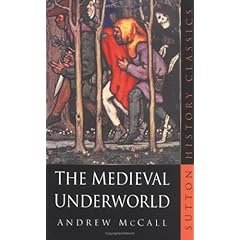
Andrew McCall The Medieval Underworld New York: Barnes & Noble (reprint), 1993. 319 pp., n.p.

This classic study, first published in 1979, pictures the incredible chaos that swept through Europe in the late Middle Ages, as the older Catholic paradigms were collapsing and wave after wave of craziness were taking their place. McCall introduces us to the world of prostitutes, homosexuals, religious heretics, Jews, and sorcerers and witches that appeared in great waves during the Tenth to Fifteenth Centuries in Europe, horrifying the church fathers and attracting great crowds, only to end up on the gallows or the chopping block.

My primary interest was in the sorcerers and witches, who were savagely attacked by the powers that be, and often driven out of the cities or sent to the executioners, although many were able to live fairly peaceful lives through this period. McCall's descriptions of the witches are quite different from those pictured in one of my favorite texts, "The Witch Cult in Western Europe," now sadly discredited and largely forgotten (I loaned my copy to a friend, who has since disappeared with it). In this earlier study, witches are pictured as joyously gathering in their covens to celebrate the sabbats and the esbats, keeping cats, toads, and other animals as pets, and, most importantly, acting as healers and comforters in their communities.

In McCall's study, however, witches are accused of cursing their neighbors out of spite, and are put on trial for heresy. Punishments were varied but often included horrible tortures, with their forced confessions to hideous deeds, and execution of the alleged witches. McCall's book, however, helps to put the witch trials into some kind of focus, since the witches were only one group to be attacked during those fanatical centuries. I would hope that our own century will be better. It could hardly be worse.

Monday, November 19, 2007

Book Review

by John M Morris, Ph.D.

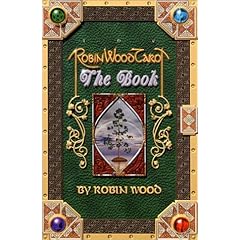
Robin Wood The Robin Wood Tarot: The Book. Dearborn (MI): A Livingtree Book, 1998. 248 pp, n.p.

After nearly ten years, this remains my favorite introduction to the tarot. A very personal account of the history and use of the tarot cards, it provides a personal look at the way in which Robin created each of the 78 beautiful cards that make up her deck.

Somehow, I'd never got around to reading the detailed history of the tarot, or some of the interpretations of each of the cards, so that this has been a week of discovery for me. And it's been exciting. First, we learn something of the history of these mysterious cards, and then we learn that historical accounts of the tarot are mostly fictions, made up by a series of authors who were more interested in their own fantacies than in historical research.

But then we find that it doesn't really matter. What matters is the meanings that you as a reader or a client find in the strange pictures on the cards. But Robin doesn't spend her time speculating on these meanings. Instead, she tells us about her own inspirations that have led to each of the illustrations. For example, the Magician is a smiling man, strong and capable, with symbols of his strength and craft. Your job as a reader is to find how those symbols apply to your client's problems, and how he or she can build decisions for a meaningful life.

I have the feeling that reading have been too tightly tied to the Rider-Waite-Smith decks, which are far too popular, but nevertheless have become standard. I'd hope that you'll use Robin's wonderful deck for at least some of your readings. You may find it, as I did, far more full of insights than any of the other decks you may find.

Book Review


by John M Morris, Ph.D.
Elizabeth Barrette Composing Magic: How to Create Magical Spells, Rituals, Blessings, Chants, and Prayers Franklin Hills (NJ): New Page Books, 2007. 240 pp., $14.99.
Here, at last, is a guidebook for all of us that are called upon to create some kind of magical working, whether in a formal ritual or in a private ceremony. Barrette's approach is inclusive, meaning that there is no single "tradition" that she is following, but rather the broad path that we sometimes call "spirituality," the path that is never restricted to a single set of relligious beliefs.

For those that have never written poetry, this is a particularly useful guide, in the preparation of poetic approaches and appeals to spiritual forces around us. We so rarely hear poetry in our rituals these days, and we need some help in writing it. Barrette tends to use traditional poetic forms, but these can inspire us to write in looser, unrhymed verse, if we want to. One chapter, "Creating Colorful Chants," was full of fun things to do with your own rituals. "Bestowing Beautiful Blessings" gave hints for these specialized forms. Finally, there were some suggestions for getting your work published. Commercial publishing is highly competitive, meaning that you may find it difficult or impossible to interest a commercial publisher. But there's no harm in trying.

Wednesday, October 31, 2007

Our Annual Packos Pilgrimage

This article was composed by Misti and uploaded by Rod, it also appears on our family blog.


Every October 31, we make our annual pilgrimage to Tony Packos in Toledo.

You remember Tony Packos? In the M.A.S.H. television series, Corporal Klinger mentioned it often. It's a Hungarian restaurant, and Klinger waxed eloquent about their hot-dogs. We stopped in the first time because we were in the neighborhood and we wondered whether it would live up to the hype. It didn't. It's OK -- pretty mediocre, but not outright bad. But it is an adult oriented restaurant.

So every October 31, we go there. Mostly because it's an hour away in Toledo, making it easier to be busy and out of the way of the "festivities" we don't want to expose ourselves to between 6pm and 9pm. We darken the house, close the gates for the only time all year, and drive for an hour, eat for an hour in a restauramt that blessedly seems to have fogotten what date it is, and then drive home for an hour, arriving home after the last of the revellers has gone home to bed or out to the bars.

Why all the effort? As witches, aren't we supposed to love Halloween?

Well, a lot of witches do love it, but frankly, Rod and I don't enjoy Halloween at all. I find the whole thing disturbing and somewhat offensive. I don't particularly mind that people who see it differently than I do want to celebrate, especially now that they've stopped trying to insist that I have to play, too. But I really want no part of it, myself.


Like so many other holidays, Halloween started out as a pre-Christian celebration. The Celts called it Samhain, and it was the celebration of the final harvest and of death. When the Christian church entered the scene, they preferred to call the day All Saints Day or "Hallowed evening". But the the notion of dead folks wandering around wasn't so easy to quash, and the church had to find a way to deal with it. The combination of fear and misunderstanding between very different cultures left us with a mish-mash of ideas, none of which make a lot of sense when thrown together out of context.


The celebration of the final harvest and the honoring of the the dearly departed has morphed into a candy-fest featuring horrific images of death and highly fantasized images of magic and witchcraft.

Our major objection to Halloween as it's celebrated now start with the whole problem of the glorification of violence and the desecration of death's sacred nature. This time of year is indeed focused on death, just as spring is focused on birth. We honour the entire cycle of life, including death. Making one part of the cycle (birth) "sacred" and another (death) "scary" seems wrong. Add to that the "devils night" antics and the destruction of property that seems to have taken root in this time of year and the whole thing becomes pretty repulsive.

We also don't like the idea of children being fed on pounds and pounds of sugar. Yep, it's their parents call, and we honor that. But we don't want to poison your children and "healthy" treats will be thrown away, so we'll just opt out, thanks. (We have at least one friend who offers books to the children who come to her door -- and that is a great idea! If we ever get past our other objections, that's probably something we'll adopt.)

The idea of begging from strangers isn't a really great model to give kids, either. We prefer that our child be raised to be a contributor because in the end, that will make him much happier. If this was a once a year phenomenon it might pass muster, but name a single day of the year for which the children aren't conditioned to expect to be indulged ...

Then there's the commercialization problem -- people spend hundreds of dollars on this non-event every year! Hundreds of dollars for two hours of revelry on a holiday that has lost any real significance. It's insane!

What about the costumes? Those, I just don't understand. I think playing dress-up is great, but why limit it to once a year? And why focus on someone else's idea of a good costume, when there is a whole world of good ideas outside the costume shops? I have one friend whose children dress in costume on any day they wish -- now *that* is fun and imaginative! Jack hasn't shown any particular interest in costumes so far, but if he ever does, he won't be limited to this one day a year.

Rod adds to this list his objection to the appeasing of the spirit world with gifts, the trivializing of magic, and the typecasting of witchcraft and the supernatural as something perhaps frightening, or evil, but most definitely "other".


No we are not Disney Witches, nor even a Hogwarts graduates. This godawful trivialization, distortion, and commercialization of death and magic is something we just don't want to be a part of. So, we're going to enjoy our journey to Tony Packos.

See y'all tomorrow, when some semblance of sanity has returned.

Monday, October 01, 2007

We have met the enemy

"There are more things in heaven and earth than are dreamt of in your philosophy."
Hamlet's words (or were they Horatio's?) have always been a challenge to us to explore the unknown. Like the tousands of plants and animals that were unknown when I was a kid, or the dozens of "new" elements that never made it into the periodic tables when I was a student. New nations keep appearing, so that the globe I once had in my living room is completely out of date, with few places in the world we're slowly learning to accept today.

I once had a small dinosaur family, tiny plastic creatures that I loved: Tyrannosaurus Rex -- I called him "Tyranny" and took him on adventures with me, along with Brontosaurus, Diplodicus, and all their friends, who were friends of mine, too.

One recent book, "Memoires of a Monster Hunter" by Nick Redfern (New Page Books, 2007) in pop-scientist style, tells of the author's attempts to locate such critters as the Loch Ness monster, or "the terrifying chimpaberra, a razor clawed, glowing eyed beast that is part giant bat and part vampire," and so on and so on. Unfortunately, the book is mostly about his treks into the wilderness and his adventures there.

Frankly, I've found it more fun to visit the real-life animals at Wolf Creek, where the big, very personable wolves are quite shy, particularly around men, but always alert and curious, protective of one another, and quite harmless to humans, although they see dogs as competitors for their territory.

Humans have a long history of destruction, far more devastating to our world heritage than anything less than the incredible planetary collision that destroyed the dinosaurs. We are at the center of a planetary disaster. Unfortunately Redfern's book shows little concern for the real disasters ahead. As Pogo once said, "We have met the enemy and he is us."


John M. Morris

Wednesday, September 12, 2007

Rune Magic: The Celtic runes as a tool for personal transformation

Deon Dolphin Rune Magic: The Celtic runes as a tool for personal transformation Van Nuys (CA): Newcastle Publishing, 1987. 149 pp., $9.95.

At one time, all I knew about the runes was an obscure line in Poe's The Bells, where a chorus of demons is tolling "bells, bells, bells, in a sort of Runic rhyme ... " or something like that. Poe probably chose the line for the sound effects, rather that for any great interest in the Rune themselves. But we can use the runes as a form of divination, or character analysis, or whatever mystical meaning we want to read into them.

This classic text is only one of dozens of "explanations" of the runes, intended to provide beginners (like you and me) with the tools we need for readings for ourselves and our friends. After some preliminary background information, the author plunges into a series of actual interpretations of varioous patterns in the runes. Drawn or engraved in small stones, shells, or other objects they are cast into a set of three circles, preferably drawn on a specially marked cloth. (Of course, there are probably as many ways of casting the runes as there are people reading them, but this way is the one that the author describes.)

Depending on their positions in the circles, the runes can be interpreted for the client to show his or her character, decisions to be made, possible future happenings, or whatever else comes to their attention. The markings on the runes vary, according to the specific tradition that they represent, and the number of runes can be as many as fifteen, meaning that the reading will depend on the specific set of stones that are being consulted.

For those that are looking for an alternative to the familiar occult tools many of us use, this book will provide an introduction to another way of performing readings.

JMM

Thursday, August 30, 2007

The urge to "kill" the teacher?

My old friend and HP, Wayland Raven often tells his students that "there is no needs to kill the teacher. When it's time to move on, move on in peace".

We all (his students at the time) nodded sagely and tut-tutted about people being so rude when they leave a group. Truly, most of us were quite sure we would never want to leave such a warm, loving group and such a good teacher. And then, one by one, it came to be our turn to move on. Some moved on in peace. Some left amid shouting and rancor.

I have watched it happen to other friends and acquaintances, too. People who seemed very close, all of a sudden were full of fault finding and anger. Why does this happen? Why is it so hard to move on in peace when the time comes, without feeling the need to "kill" our spiritual teachers?

I think a part of it is the way we come to recognize people who have something to teach us. It's rather like falling in love, really. We see someone who seems uncommonly wise and astonishingly "together". We want to be near this person and learn what they know. We come to rely on the maturity and wisdom we perceive from them, whether through formal lesson or as living examples. These are the people we look up to. Just as in falling in love, though, we tend not to notice immediately the more "human" qualities and clay feet.

But it is our own perception of who a person is, our perception what she or he stands for, the part of his or her life that speaks to our own, that makes them stand out for us as teachers. In our desire to feed our own souls, we reshape the teacher into the person we need him or her to be and what we perceive may bear little resemblance to human to whom we attach these perceptions.

As we learn more of life’s most valuable lessons through them, teachers rise in our esteem. We be come more and more deeply attached to our perception of what the teacher represents and any indications that they may not be what we think they are cause momentary confusion, but are quickly dismissed.

Sooner or later, though, the day comes, (sooner if the teacher has done his or her job properly), when our need for the teacher diminishes. It is in that twilight of the teacher/student relationship that we begin to see the "flaws" of the teacher in the harsh light of day. It happens in love relationships, too. It doesn't have to mean the end of the relationship, if both parties are sufficiently mature. It does, however, mean that there is a fundamental change taking place. Either from "infatuation" to "mature love" or from student and teacher to respectful, amicable equals. The student eventually learns that the teacher was thoroughly human all along, but that momentary perception of the "perfect model" had us blinded to the flaws for a while, so that we would strive harder and further to reach our own spiritual goals.

When we begin to notice our teacher's flaws, the teacher may, indeed, be teaching us one last "lesson" by reflecting our own weaknesses back to us. We would do well to examine those aspects of ourselves that reflect what is most irritating about our teacher.

The mature student accepts that the illusion was his or her own and, though momentarily disappointed in the reality, expresses only gratitude for the time the teacher has spent and the lessons taught and learned. The mature teacher accepts that his or her work is complete in this relationship and gracefully accepts the students thanks without expectation.

In any case, we know the time has come to look further afield for inspiration and so, we start all over again.

Friday, August 24, 2007

Book Review: Ghost Stories

by John M Morris

When I was a kid, I was fascinated by stories of the occult, ranging from Ouija boards to tales of prophecies found in the Great Pyramid, encouraged by my mother's stories of ghosts she had discovered in an old house they'd once lived in. I tried to be sophisticated enough to ignore stories like these, but they must have stayed with me anyway. A recent book has recalled this earlier fascination with ghosts, fairies, and goodness knows what else, inhabiting the world of the supernatural.
John Kachuba's Ghosthunters is full of stories of encounters with ghostly presences, often scary, and always unexpected. The author has made a full-time job of lectures on ghosts, as well as explorations of haunted houses and other mysterious places. If you've ever had any doubts about the reality of ghosts, these tales will be enough to convince you otherwise.

At the same time, I'll have to admit that these encounters seem awfully trivial. There are no chests of gold dubloons, no secret jewel boxes, nothing of value discovered. I was reminded mostly of the search for Visitors from Outer Space, where there have been hundreds of encounters, but, sadly, nothing that really mattered. In any case, you may want to read a dozen ghost stories, which are here told, with many flourishes, as a way to get to sleep on a dark and windy night.

Wednesday, August 15, 2007

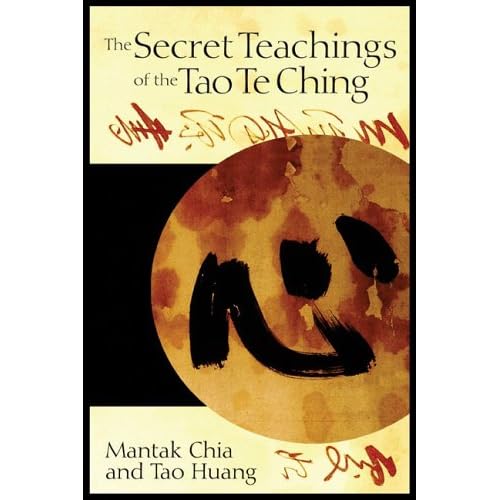
Review: The Secret Teachings of the Tao Te Ching by JM Morris


Mantak Chia and Tao Huang The Secret Teachings of the Tao Te Ching Rochester (VT): Destiny Books, 2005. 246 pp., $16.95.

Taoism may qualify as one of the world's oldest religions, dating back some 2,500 years, to the teachings of Lao-Tse, who summarized his teachings in short, pithy aphorisms, and who taught a religion without dogma, based more on direct, personal experience than on religious doctrines. It is particularly refreshing at a time when religion is relying on rigid doctrines that we thought the world had outgrown.

Again and again, Lao-Tse is looking beyond doctrine and dogma to find the essential core of the religious experience. Words are always misleading: "The Tao that can be named is not the eternal Tao," and, as religious leaders have repeatedly discovered, reciting words and doctrines will get us nowhere. "Logic and sermons will never convince," as Whitman says: "The chill of the night strikes deeper into my soul." Yes, Whitman would probably qualify as a Taoist, as would many of the prophets we have loved.


I would advise against studying the first half of this new text before you plunge into the second half, which contains the core of Taoist teachings. The initial chapters may be of interest to those of you who think in terms of exotic exercises (please don't ask me to give the details!) rather then spiritual searching. But the detailed quotations from the Tao Te Ching, together with the commentaries, which make up the second half of this book, are well worth exploring.

Sunday, August 12, 2007

Love, by John Morris

I was watching a film clip, on an obscure Internet site, with an affectionate interlude between a dog and a cat, both of them enjoying the other's warmth. The kitty was licking the dog's face at one point, and the dog was gently hugging the cat. They were obviously very much in love.

It reminded me of lessons I learned long ago in a theological school, in which the religious tradition has made a sharp distinction among erotic love, parental love, and brotherly love, as though these were quite different sorts of human experience. Erotic love, with Venus or Aphrodote as its matron Goddess, has always been the most exciting, but also the most dangerous, to the extent that some religions have called it "sin":
"Oh, do not tell the priest our plight, for he would call it sin! For we
have been in the woods all night, a-conjuring summer in,"

in the words of Kipling's wonderful song, "Oak and ash and thorn." And, we can only mourn at the triumph,

"Thou has conquered, O pale Galilean, and the world has grown gray with thy
breath,"


in the words of one of my favorite poets, Algernon Charles Swinburne. We are slowly emerging out of that gray world, thanks to the warmth that Aphrodite has brought, full of light and color and love.

Motherly and fatherly love is quite different. It is the warmth that the kitty and doggy showed. In pictures from Wolf Creek Habitat, down in Southern Indiana (visit them at www.nighthowls7.com -- they're wonderful!), we could see the daddy and mommy wolf waiting, patiently and hungrily, as four ravenous little cubs were feasting on a deer carcass. The parents were hungry, too, but they were waiting for the babies to have their meal first. This is what parents do. This is the fierce protective behavior that keeps the worst predators away from the children. This is the angry search of the Goddess Isis for the baby Horus, and which is the fierce, protective binding that holds the family together.

Finally, there is the generous, brotherly or sisterly love that we sometimes find in warm, even heroic acts, like those that kept police, firemen, and many others searching through the ruins of the World Trade Center. Many of these men and women died, and others were left with lingering breathing problems, because of smoke and dust inhalation. More recently, miners were searching, apparently in vain, for some of their comrades trapped underground. Firefighters have been attempting to contain the many fires raging in our forests. This kind of heroism is an expression of another sort of love, that truly holds civilization together.

There are many species and subspecies of love, but these three are the traditional varieties. Love is central to our religion, based as it is on "perfect love and perfect trust." Without love, there would be nothing left. With it, we rejoice in the light of day

Friday, August 03, 2007

Love and Death Across a Chasm

Love and Death Across a Chasm
by Misti Anslin Delaney

The death of a loved one is always devastating, no matter how prepared we think we are. It's made even more difficult when that love was carefully built and nurtured across the chasm of cultural differences.

That was the case between my father and me. Dad was very conservative; a devout, and perhaps even fundamentalist, Roman Catholic with a very old world view of women and our place in the world. I am pretty liberal and, of course, I am a witch. I have a very different view than my father's of the place of women in the world. This caused untold trouble and tension between us throughout my childhood and young womanhood, even before the religious thing.

As we both grew older and more tolerant, we realized that each of us wanted a better, closer relationship, I with the only father I'll ever have, and he with his only daughter. So, slowly and carefully, we built a suspension bridge of tolerance and love, shared views on those few areas on which we could agree and our shared devotion to family, across the chasm between our worlds. Periodically we would crawl tentatively out onto that bridge to meet in the middle, clinging precariously to what security we could find there.

We had both come to trust that bridge in the decade since our first tentative attempts to build it, and so it was that we met there almost daily in long telephone conversations about everything and, mostly, nothing. It was there that he said "goodbye" in the weeks before he died. It was subtle, and I'm not sure he knew he was leaving ... but things were different somehow. My father, who had visited me only twice in the 22 years since I left home, when he happened to be in the neighborhood, and who had not attended either of my weddings, suddenly started to make plans to come to my home to put air conditioners in my windows. (Not something I had planned to do.)

When, within a week of making those plans, he became too ill to travel, he sent me the first and only "surprise gift for no special reason" that he ever sent to me. It was small -- a bag of mesquite chips for our barbecues, because I had mentioned that they're a bit expensive up here -- but it was a gift specifically for me from my Dad.

The day after I received them, I received word that he had died suddenly.

I think the hardest part of my father's death was venturing out onto that precarious bridge alone, to cross back over into his world one last time for his funeral. I found myself very much alone in my father's world—welcome, but a stranger with strange views. I was surrounded by family and friends remarkable in their devotion to one another and to their God.

Although my mother and brothers know who I am, everyone else around us assumed that I shared my family's devotion to my father's faith. Since I didn't think religious arguments were going to help anyone through that difficult time, I elected to keep my own counsel for the nine days I was there.

Psychologists say that when a parent dies, we have a tendency to question everything about our lives. When our lives are a secret to the people we've grown up with, I think it redoubles the effect. My first challenge was figuring out what one does when one is a very visible participant in a religious ceremony where everyone assumes we share the faith, but we don't.

It seemed to me that even if my 25 years away hadn't removed any possibility of pretending I was a Catholic, to pretend now would serve only to make a farce of my family's faith. But to act like a complete alien to my mother's faith would be disrespectful and would hurt her deeply. So, I compromised. I sat, stood, and kneeled as the ceremony required and kept my head respectfully bent, but I was silent during the prayers.

I thought I was doing OK -- until the priest, who had no doubt counseled my parents about how to handle their only daughter's falling away from the faith, make several cutting remarks about "faithless, hopeless pagans". The first time, I couldn't believe what I'd heard. The second he looked right at me as he made his remark.

How very little he knows about us.

Through the time I was with them, my immediate family was very, very welcoming and loving. Believe it or not, that caused my second dilemma. I had tried for many years to believe as they do and all my life I had felt like an outsider in my own birth family. I know with deep regret the pain my "falling away" caused both my parents.

After a few days of the loving and welcoming, and the constant salvation talk, I found myself wondering, if I tried again now, whether I might be able to "believe" this time. Not for myself, but for my mother and father. My return to their church would have made my father so happy, and it would still bring my mother and brothers great joy.

Cut off, as I was at this vulnerable time, from anyone who really understood what I believe and who shares my faith in the Goddess and the God and the wheel of time, the joy my faith brings me began to seem "silly" and unreal.

Prevented by my respect for my family's beliefs from sharing my real understanding of what had happened between my father and myself in those last weeks and my certainty that he would be back, perhaps in the baby who was to be born to my brother and his wife just 5 weeks after Dad's death, I began to question everything. It was very painful. I knew I didn't (and probably couldn't) believe as they do. I knew that religion isn't something you choose, like a party dress, to please someone else. But I also couldn't feel my own faith. I felt that all faith had been cut away from me, and that my soul was raw and bleeding.

Fortunately, I am a voracious reader on almost any topic, and I knew the effects of mourning could have on one's soul, so I was able to observe these feelings with a little objectivity. I resisted the urge to act on anything until I was home, in my own world.

When I left for home, my mother sent with me a huge basket of flowers that had been sent for my father's funeral. As I carried that glorious basket through airports, people would stop me to comment on them and ask about them. It gave me a chance to explain to complete strangers that my father was dead. Everyone I met that way was extremely kind and the flight attendants were attentive and caring on every flight. That was very comforting. This time, as I crossed that bridge my father and I had built together for the last time, I didn't feel quite so alone.

When I was finally home, I was still haunted by my feeling of having had all belief cut away from me. For weeks I wasn't able to perform ritual, either for my father, or for myself. In a sense, I felt he was always nearby and would be hurt and perhaps insulted to have his beliefs disregarded by my doing ritual for him. It made no logical sense. Since he's passed through the veil, he now knows better than any of us alive, what Truth is. His soul is unlikely to be as encumbered by prejudice as those of us who must understand with our frail, limited little human brains. But the feeling persisted; the effect, no doubt, of my own childish guilt at wanting to do something that Daddy wouldn't approve of. (I have a very active inner toddler.)

I reached out to all the wisest pagans I knew to ask for thoughts and reaffirmation. Many shared with me thoughts that brought me great comfort, and one especially wise soul shared with me a ritual that could respect both my father's beliefs and my own.

Gradually, as the moon waxed, I too, grew stronger. As the full moon approached, I gathered the supplies I needed for what I had to do. On the day after the full moon, I set up a memorial to my father on my altar. A photograph of the man he was; a white pillar candle that burned as long as anyone was in the house and awake; a beautiful little glass box containing a few of the mesquite chips that were his last gift to me; and the basket of now dried flowers from his funeral.

Each time I lit the candle, I told my father that I love him, and will miss him, but that it was now time to move on. I sent the energy of the burning candle to him to help him find his way into his next world, whether it be the heaven he so looked forward to, or a new life here.

On the next full moon, I will did a ritual alone, commending my father's soul to his God. I asked my spirit guides for support in learning to live without my father, in the middle of that bridge we'd built through the years from the tears and yearnings of two very different souls who wanted to love and understand.

©1998 Misti Anslin Delaney